The short version: Cockroach control succeeds or fails on identification. A German cockroach infestation in a kitchen is a breeding population living inside your walls and appliances, and it is beaten with a methodical program of vacuuming, gel baits, growth regulators and follow-up visits — not foggers. A large 'palmetto bug' wandering in from the mulch is a different creature with a different answer: exterior treatment and exclusion. When you call through PestReach USA, we connect you with an independent local provider who will identify the species first, because the right program for one roach is wasted money on the other.
The cockroaches found in American homes
The German cockroach is the serious indoor pest: small, tan, with two dark stripes, it lives only indoors, prefers the warm, humid voids around kitchen and bathroom plumbing, motors and appliances, and breeds faster than any other house roach — a single female's egg case carries dozens of nymphs, and several generations overlap at once. Brown-banded cockroaches favour warmer, drier spots higher in rooms — behind pictures, inside electronics, on closet shelves — and spread through a home more widely. Oriental cockroaches haunt cool, damp basements, drains and crawlspaces in the North and Midwest.
The large peridomestic species — American, smokybrown, Australian and Florida woods cockroaches — live outdoors in mulch, leaf litter, woodpiles, tree holes and sewers across the South and warm regions, entering homes through gaps, drains and overhanging branches, especially in summer and after storms. They do not breed indoors as a rule, and a few sightings a season is an exterior problem. Treating a home for 'roaches' without settling which of these worlds you are in is how people end up paying for kitchen baiting when they needed tree and perimeter work — or vice versa.
Why German cockroaches are a program, not a visit
German cockroaches defeat one-shot treatment on biology. The female carries her egg case until just before hatching, sheltering the eggs from contact insecticides; the nymphs that emerge live deep in harbourages a spray never reaches; and populations in many cities are resistant to the pyrethroids in consumer sprays. A professional program answers each point: a vacuum removes a large share of the population and egg cases on day one, gel baits placed in the harbourages themselves do the killing over the following weeks, insect growth regulators prevent nymphs from maturing into breeders, and dusts or targeted treatments reach the voids. Follow-up visits every few weeks re-bait, measure the decline and catch the hatch curve until monitoring shows the population is gone.
Sanitation shapes how fast this goes. Grease films behind stoves, crumbs in cabinet corners, water under sinks and cluttered, undisturbed storage are the food and shelter the population runs on; baits compete with that food, so a clean kitchen makes bait dramatically more effective. In multi-unit buildings, adjoining units may need concurrent treatment, and a good provider will raise the building conversation honestly rather than letting one unit fight a building's problem alone.
- Egg cases (oothecae) shield eggs from insecticides and hatch for weeks
- Documented resistance to many common spray insecticides
- Harbourages are inside appliances, hinges, voids and electronics
- Baits work through the group gradually — feed, return, share
- Growth regulators break the breeding cycle over a generation
Treating the big outdoor roaches
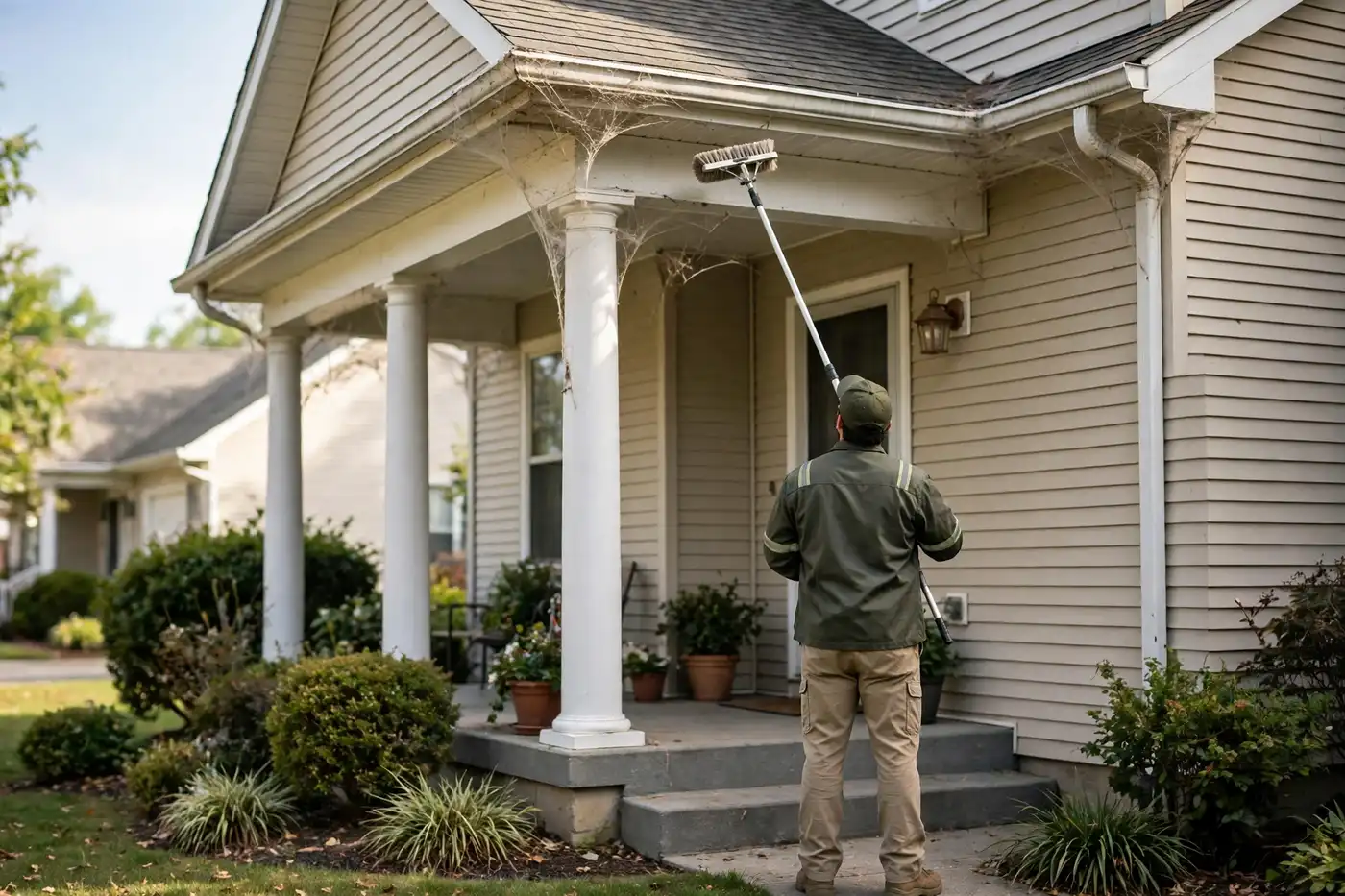
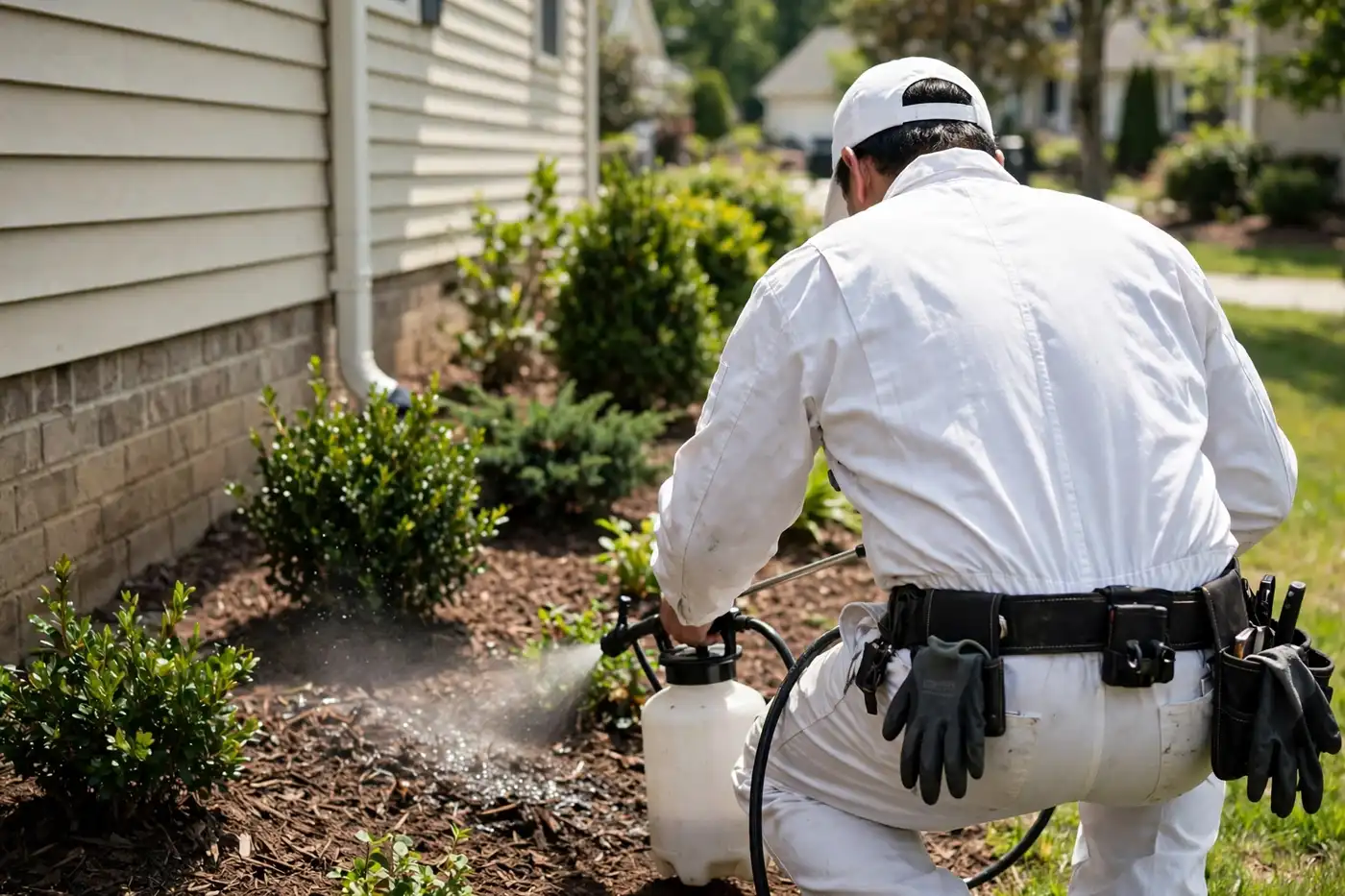
For American and smokybrown cockroaches — the South's 'palmetto bugs' — the program is mostly exterior. Treatment targets the harbourages: mulch and leaf litter against the house, tree holes and canopy touching the roof, crawlspaces, garages, and the sewer and drain connections where populations build. Granular baits in landscape beds, crack-and-crevice work at entry points, and a maintained exterior barrier reduce the pressure, while drain treatment and screens address the plumbing route indoors. Indoors, the job is exclusion and evidence: seal the gaps, check the attic and basement, and confirm there is no indoor breeding before anyone proposes interior baiting.
Season and weather drive these roaches' appearances: hot months, heavy rain that floods ground harbourages, and the first cold snaps all push them inside. In Gulf and Florida homes a certain number of sightings is the climate, not a failed service — what matters is that they are individual invaders, not a breeding population, and a provider should help you tell the difference rather than sell fear.
Preparation and what to expect
For German cockroach work, preparation is a real part of the cure: access to cabinet hinges and corners, the voids under sinks, and the spaces behind refrigerators and stoves is where treatment must reach. Your provider will give you a preparation list for your situation — follow it fully, because a technician who cannot reach the harbourage cannot treat it. Expect a schedule, not a single date: an initial intensive service, then follow-ups, with numbers dropping sharply in the first weeks and stragglers monitored to zero.
Skip the foggers meanwhile. Total-release foggers are the single most common way homeowners make a roach problem worse — they scatter German cockroaches into new rooms and adjoining units and contaminate the very surfaces where bait needs to go. If you have used them, tell your provider; it genuinely informs the plan.
- Empty affected cabinets and clear under sinks for access
- Clean grease and food residue from behind and under appliances
- Fix plumbing leaks and dry out under-sink areas
- Remove items stored on the floor of pantries and utility rooms
- Plan to be out of treated rooms until surfaces dry, per label directions
Keeping roaches out afterwards
Roaches follow food, water and entry. Cardboard is a classic transport and harbourage material — in roach-prone settings, unpack deliveries promptly and keep stored cardboard out of kitchens. In apartment buildings, reporting activity early protects your unit and your neighbours; infestations caught at 'a few roaches by the coffee maker' stage are weeks of work, while neglected ones become months.
If you are seeing roaches in daylight, finding them in several rooms, or finding the small striped German species at all, the infestation is established enough that a professional program is the efficient route. Through PestReach USA we connect you with a local provider who will identify the species, walk you through preparation, and set the visit schedule that the biology actually requires.
- Store food sealed; manage grease and crumbs daily in problem kitchens
- Take out recycling rinsed; do not let cardboard accumulate
- Seal gaps around plumbing, conduits and cabinet voids
- Address drips and condensation — water is the roach magnet
- Inspect deliveries, groceries and used appliances before settling them in
A closer look: the harbourage map decides everything
Ask a cockroach specialist where the treatment happens and they will not point at the kitchen floor. They will point at the hinge of the cabinet door, the void under the sink where the pipes pass through, the motor housing of the refrigerator, the underside of the dishwasher, the hollow of the stove's back panel. German cockroaches spend most of their lives compressed into cracks within a short walk of water, warmth and food, aggregating in groups whose droppings chemically mark the spot as safe — which is why the population is always more concentrated, and more localised, than the sightings suggest.
Treatment follows that map with precision. Gel bait is placed in dots exactly at those aggregation points, where every emerging nymph will encounter it within its first foraging trips. Void treatments reach the wall cavities the plumbing runs through. A vacuum with a crevice tool physically removes a remarkable share of the population — including egg cases — before any product is applied, which is why the initial service takes so much longer than the follow-ups. What the programme is really doing, visit by visit, is shrinking the map: fewer harbourages occupied, fewer egg cases maturing, until monitoring traps come back empty twice in a row.
The same logic explains the classic failure modes. A fogger fills the open room — the one place cockroaches are not — with a repellent that pushes them out of the treated harbourages into new ones, expanding the map. A spray applied over surfaces where bait will sit contaminates the bait. And a landlord who treats one flat in a row of six has simply chosen which harbourages empty this month. The map is the infestation; treat the map.
How a cockroach control request is handled
When you call PestReach USA about cockroach control, the call is routed to an independent local provider who does this work in your area. Three things speed everything up: where the activity is, when it started, and what you have already tried. On urgency: German cockroach findings are treated as time-sensitive, since the population compounds weekly; mention if the property is a rental or a food business. The provider arranges the inspection directly with you, explains the plan and their terms before any work, and confirms their licence and insurance on request. PestReach USA does not set the provider's prices or schedule — but a problem described precisely reaches the right specialist first time, and that is worth more than any other shortcut.
One more thing worth knowing before you call: you do not need to have identified the pest yourself, and you do not need to have prepared anything beyond safe access to the area. Identification is the provider's first job, and preparation instructions — where any are needed — come from them, specific to the method they will use at your property. If you have photographs or notes about when the activity is worst, mention them; they help the inspector start in the right place.