The short version: Mosquito control for a home yard works on two fronts: reducing the adults that rest in your landscaping, and eliminating the standing water where mosquitoes breed. A local provider typically applies a barrier treatment to foliage and shaded resting sites every few weeks during the season, treats water that cannot be dumped with larvicide, and shows you the breeding spots to keep empty between visits. When you call through PestReach USA, we connect you with an independent local licensed provider who will survey your property and set a treatment rhythm matched to your local season — which in the Gulf South may run most of the year and in the North only a few months.
Why mosquitoes own some yards and not others
Mosquitoes are weak fliers with a short range — most species travel well under a mile, and the container-breeding species that plague suburbs often live their whole lives within a few hundred feet of where they hatched. That means the mosquitoes biting in your yard were very likely born in your yard or your neighbours'. Females lay eggs in or near standing water; larvae develop in as little as a week in warm weather; and adults spend their days resting in cool, humid shade — the undersides of leaves, dense shrubs, under decks and porches, and inside hollow landscaping features.
Different species behave differently, and it changes the control plan. Day-biting Asian tiger mosquitoes breed in small containers and stay close to homes across the East, South and expanding parts of the Midwest. Evening Culex mosquitoes — the West Nile virus vectors — breed in stagnant, nutrient-rich water including clogged gutters and neglected pools, and are most active at dusk. Floodwater species hatch in waves after heavy rain in low-lying areas. A provider who identifies what is actually biting can target the right water and the right resting sites instead of spraying everything and hoping.
The breeding-site audit: where the real control happens
Every effective mosquito program starts with water. Professional technicians walk the property looking for the standing water most homeowners have stopped seeing: the sagging tarp, the corrugated drain pipe that holds a cup of water after every rain, the saucer under the tomato pot, the gutter that overflows in one corner. Water that can be dumped gets dumped. Water that cannot — ornamental ponds, rain barrels, low drainage areas — is treated with larvicide products (such as Bti or methoprene formulations) that prevent larvae from developing into adults without treating the whole environment.
This source reduction is not a courtesy add-on; it is the difference between a program that works and one that chases adults forever. A single neglected container can produce hundreds of mosquitoes a week a few feet from your patio, overwhelming any barrier treatment. Providers who take the audit seriously will leave you a short list of your property's repeat-offender spots, because your five-minute weekly check between visits is part of the treatment.
- Clogged gutters and downspout extensions holding water
- Flowerpot saucers, buckets, watering cans and toys
- Tarps, grill covers and boat covers that pool rain
- Birdbaths, pet bowls and kiddie pools not refreshed
- Old tyres, firewood tarps and stored items that catch water
- Low lawn spots, drainage swales and French drains
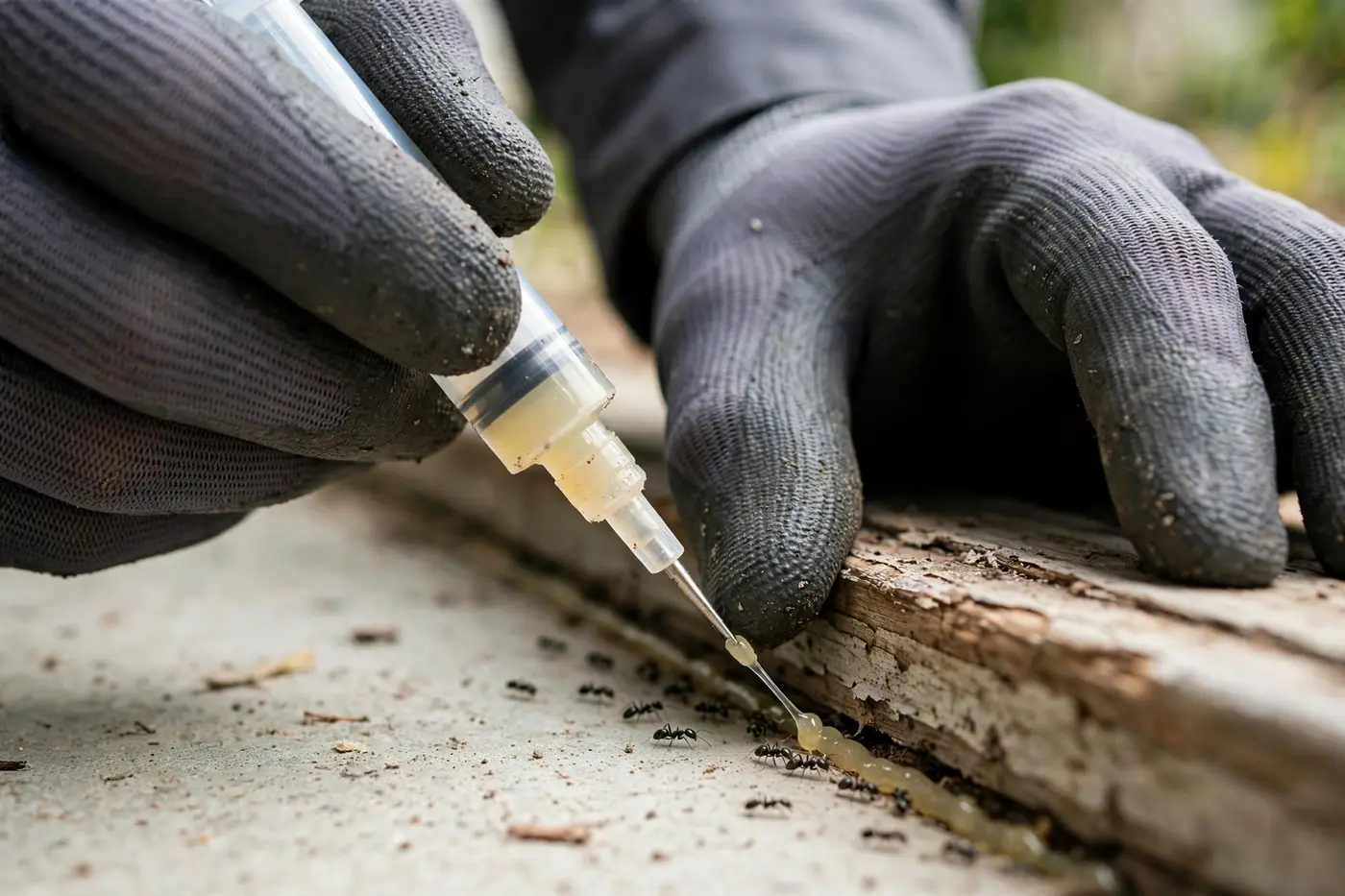
Barrier treatments and misting systems
Barrier treatment applies a residual insecticide to the places adult mosquitoes rest: the undersides of foliage, shrubs and hedges, under decks, along fence lines and in shaded corners. Treated surfaces keep working for roughly three to four weeks, which sets the standard re-treatment interval during the season. Application technique matters — thorough coverage of undersides and interior foliage, not a quick pass over the lawn — and timing avoids blooming plants and conditions that would harm pollinators, which licensing and labels require applicators to respect. Open lawn itself is poor mosquito habitat and is usually not the treatment target.
Automatic misting systems are the installed alternative: a network of nozzles around the perimeter and key landscape zones, fed from a reservoir unit, releasing short mists on a timer at peak mosquito hours (typically dawn and dusk) and on demand before outdoor use. Systems need professional installation, refills and seasonal maintenance, and suit larger properties, long-season regions and households that use the yard daily. Both approaches pair with the same foundation: no breeding water, or neither will keep up.
Mosquito season is not the same everywhere
In South Florida, the Gulf Coast and Hawaii, mosquitoes are a near year-round management problem, with pressure peaking in the wet summer months. Across the Southeast and mid-Atlantic, the season typically runs from spring into late fall. In the Northeast, Midwest and Mountain West, the season compresses into late spring through early fall, punctuated by hatch waves after heavy rain. Desert Southwest cities see mosquito activity spike around the monsoon and wherever irrigation creates standing water, while the Pacific Northwest has a milder but real season in lowland areas.
That geography is why a local provider matters for this service more than most: they know which species dominate your county, when the season actually starts, and which local conditions — a nearby retention pond, a greenbelt, a tidal marsh — drive pressure that a barrier alone cannot fully hold back. Setting honest expectations for those settings is part of the service.
What you can do between visits
Mosquito control is one of the services where the homeowner's habits genuinely share the workload. The weekly tip-and-toss round takes minutes. Fans are a surprisingly effective patio defence because mosquitoes cannot navigate moving air. Keeping grass short and shrubs opened up reduces the humid resting habitat adults need during the day. None of this replaces treatment in a high-pressure property, but it determines whether a program cruises or struggles.
If mosquitoes are ruining your yard, the practical first step is a property survey by a local provider — through PestReach USA we will connect you with one who serves your area. They will identify the breeding sites you have been walking past, the species involved, and whether a seasonal barrier program, a misting system or a one-off event treatment is the right fit, with the schedule stated plainly before you commit.
- Walk the yard weekly and dump anything holding water
- Refresh birdbaths and pet water every few days
- Keep gutters clear and check drain extensions after rain
- Trim dense shrubs and mow regularly to reduce resting shade
- Run a fan on the patio — mosquitoes are weak fliers
- Repair window and door screens before the season starts
A closer look: the two mosquitoes in your yard
Most yards host two different mosquito problems wearing one name. The first is the container breeder — in much of the country, the Asian tiger mosquito and its relatives — which lays eggs in the water held by planters, toys, tarps and gutters, bites during the day, and rarely travels more than a few hundred feet in its life. For this mosquito, your yard is not visited; it is inhabited, and the control answer is relentlessly local: empty the containers, treat the water that cannot be emptied, and treat the shade it rests in.
The second problem arrives on the wing: the dusk-biting species that breed in ditches, retention ponds, marsh edges and floodwater, and commute into your yard to feed. Against these, breeding-site work on your property helps less and the barrier treatment of resting foliage — plus honest expectations — matters more. A provider who walks your property will usually find both problems in some proportion and should tell you which dominates, because the service plan and the result you can fairly expect are different for each.
There is a third actor worth naming: the neglected pool, the ponded construction site, the neighbour's yard of containers. Because even the wide-ranging species measure their commutes in hundreds of feet, one derelict property can supply a whole street. Good providers say this out loud and, where there is a mechanism — a landlord, a city mosquito district, a code complaint — will point you to it. Yard programmes work; they work best when the street's worst breeding site is not re-stocking the air every evening.
How a mosquito control request is handled
When you call PestReach USA about mosquito control, the call is routed to an independent local provider who does this work in your area. Three things speed everything up: where the activity is, when it started, and what you have already tried. On urgency: mosquito programmes are seasonal and book ahead of the peak; event treatments should be requested several days out. The provider arranges the inspection directly with you, explains the plan and their terms before any work, and confirms their licence and insurance on request. PestReach USA does not set the provider's prices or schedule — but a problem described precisely reaches the right specialist first time, and that is worth more than any other shortcut.
One more thing worth knowing before you call: you do not need to have identified the pest yourself, and you do not need to have prepared anything beyond safe access to the area. Identification is the provider's first job, and preparation instructions — where any are needed — come from them, specific to the method they will use at your property. If you have photographs or notes about when the activity is worst, mention them; they help the inspector start in the right place.