The short version: Termites cause damage quietly, from inside the wood, which is why inspections matter as much as treatments. In most of the United States the main threat is the subterranean termite, which lives in soil colonies and reaches wood through mud tubes; hot, dry regions also deal with drywood termites that live inside the wood itself. A local licensed provider can inspect your home, identify the species and conditions present, and carry out the right response — liquid soil treatment, a monitored bait system, localized drywood treatment, or corrective work where moisture is inviting colonies in.
The termites that matter, and how they differ
Subterranean termites are the most widespread and destructive group in the United States. Their colonies live in the soil — sometimes containing hundreds of thousands of individuals — and workers travel up into structures through pencil-width mud tubes they build to stay moist and hidden. They eat the soft springwood of framing, subfloors and trim, often leaving only a painted surface or a thin veneer of wood over a honeycombed interior. Formosan subterranean termites, found across the Gulf South and parts of the Southeast and Hawaii, form especially large colonies and can also establish above-ground nests in structures with a moisture source.
Drywood termites are a different problem: common along the southern and coastal edges of the country and in the Southwest, they live entirely inside dry wood — furniture, framing, eaves, window trim — and need no soil contact. Their tell-tale sign is frass: tiny, hard, pellet-like droppings pushed out of kick-out holes, often piling up like pepper or sawdust granules on sills and floors. Dampwood termites, mostly a Pacific coastal issue, attack wood that stays wet — leaking decks, siding and trim — and generally leave when the moisture problem is fixed. Correct identification matters because each group is treated in a fundamentally different way.
Signs of termites every homeowner should know
Most homeowners discover termites by accident: a swarm of winged insects pouring out of a baseboard on a warm spring day, a pile of discarded wings on a windowsill, a vacuum cleaner bumping through a suddenly fragile baseboard, or paint that blisters for no obvious reason. Subterranean termites swarm typically in spring — after rain, on warm humid days — and drywoods tend to swarm in late summer and fall. A swarm indoors means the colony is in or immediately beside the structure; a swarm outdoors in the yard is common in termite country and is a reason to inspect, not panic.
The quieter signs reward a once-a-year walk-around: mud tubes on the foundation, hollow-sounding wood when tapped, doors and windows that suddenly stick as framing shifts, and moisture-damaged wood anywhere it touches the ground. By the time damage is visible on painted surfaces, colonies have often been feeding for years, which is precisely why annual inspections in termite-prone regions are standard advice from housing and extension authorities.
- Mud tubes climbing foundation walls or piers
- Swarmers (winged termites) or piles of shed wings near windows and lights
- Wood that sounds hollow or papery when tapped
- Blistered, bubbling or darkened paint and warped trim
- Frass pellets below kick-out holes in eaves, trim or furniture
- Floors that feel spongy or start to sag
What a proper termite inspection covers
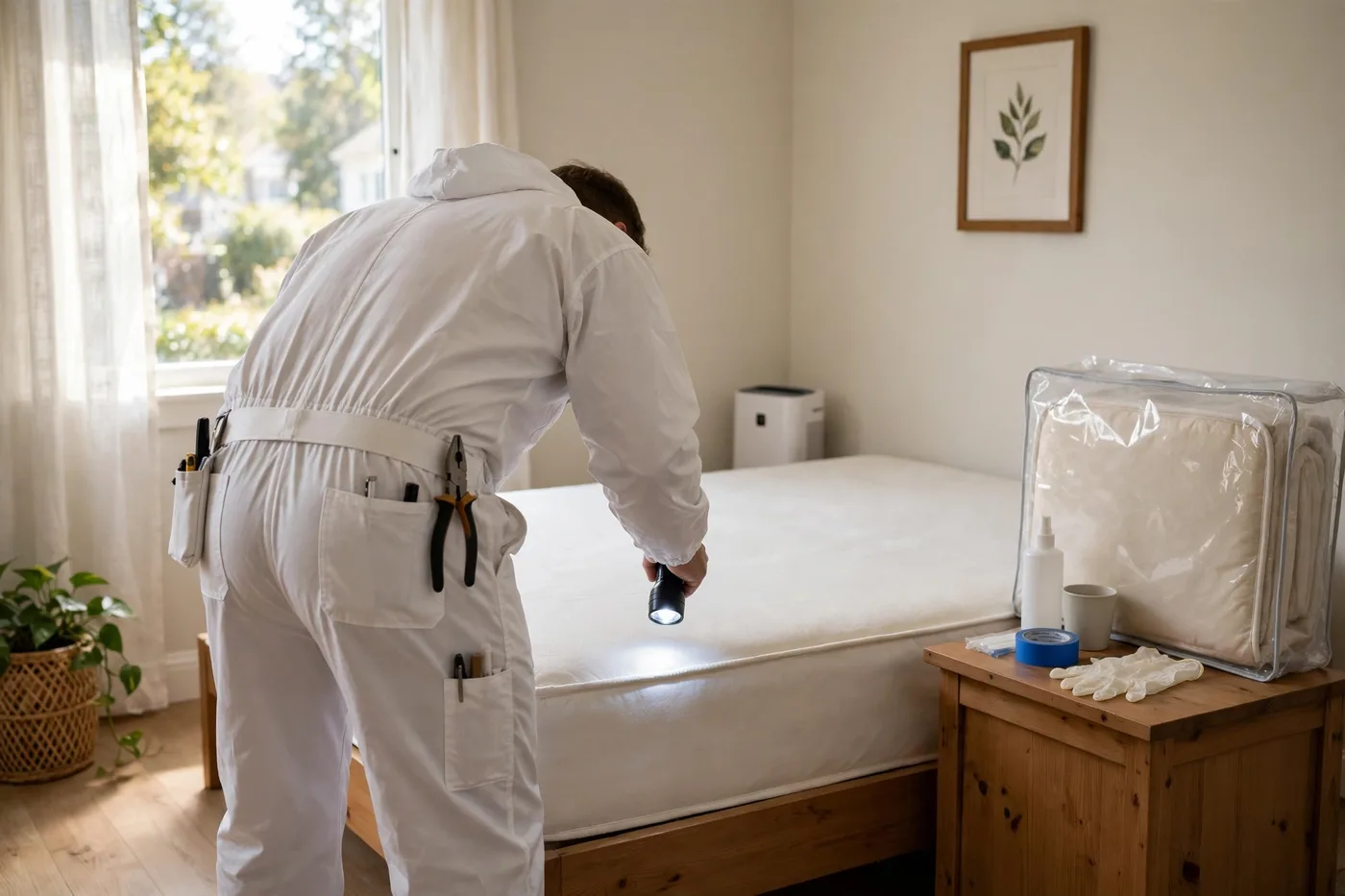
A termite inspection is a systematic hunt for evidence and for the conditions that invite it. The inspector works the exterior foundation, checks garage and basement walls, enters the crawlspace or attic where access allows, probes suspect wood to test whether it is sound, and looks for mud tubes, frass, swarm evidence, old damage and active moisture problems — plumbing leaks, grading that pushes water toward the house, wood debris and firewood against the foundation, and mulch piled high against siding. In many states the inspector issues a written report, sometimes on an official form used in real-estate transactions.
An inspection is not a treatment and a report of 'no activity' is not a permanent all-clear — it is a snapshot by a trained eye, backed by instruments like moisture meters and probing tools. Where evidence is found, the report defines the treatment scope: which areas are active, what conducive conditions need correcting, and which treatment method fits the species and construction. That written record is also what makes future inspections meaningful, because change over time is itself diagnostic.
Treatment options: liquid barriers and bait systems
For subterranean termites, the two established strategies are liquid soil treatments and bait systems. A liquid treatment applies a termiticide in a continuous zone in the soil around (and sometimes under) the structure — along the exterior foundation, in drilled holes through slabs and patios where needed, and around plumbing penetrations. Modern non-repellent products let workers pass through the zone and carry the material back to the colony, affecting termites well beyond the treated soil itself. The quality of a liquid job is mostly about continuity: a gap in the zone is a doorway, which is why proper trenching, rodding and drilling matter more than the brand on the tank.
Bait systems take a monitoring approach: stations are installed in the soil around the home and checked on a schedule; when termites feed in a station, bait containing a slow-acting growth regulator is introduced and carried back through the colony. Baiting appeals to homeowners who prefer minimal drilling and a monitoring record, and it can suppress colonies before they reach the house. Spot and localized treatments — foam or wood-injection products into a specific active area — suit limited drywood infestations, while large or inaccessible drywood infestations are the cases where whole-structure fumigation enters the conversation, a specialized job performed by licensed fumigators with full vacate procedures.
Keeping termites away after treatment
Treatment handles the colony; conditions decide whether the next one moves in. Termites are drawn by the same trio everywhere: moisture, wood-to-earth contact, and hidden access. Grading soil so water runs away from the house, extending downspouts, repairing slow plumbing leaks, keeping mulch pulled back from the foundation line, and clearing the wood scraps and old form boards that builders leave in crawlspaces all remove the invitations. In damp crawlspace regions, vapour barriers and ventilation (or a conditioned crawlspace) change the moisture picture fundamentally.
Annual inspections are the other half of prevention — most treatment warranties and service agreements are structured around them, because a professional eye catching a single new mud tube is the cheapest problem in termite work. Keep your treatment records with your house papers; in termite country they are a genuine asset when the home is sold, and many buyers and lenders ask for them.
- Fix leaks and redirect water away from the foundation
- Keep soil and mulch a few inches below siding and weep holes
- Remove wood debris, stumps and form boards from the yard
- Store firewood away from the house, off the ground
- Maintain ventilation and moisture control in crawlspaces
- Keep annual inspections on the calendar
A closer look: the conducive-conditions report
Every proper termite inspection produces two findings: whether termites are present, and what the property is doing to invite them. The second list — the conducive conditions — is routinely the more valuable document. Earth-to-wood contact where a deck post or a planter meets the structure. A crawlspace with standing moisture and no vapour barrier. Firewood stacked against the siding. Form boards and grade stakes a builder left in the soil decades ago. Mulch piled so high it bridges the weep holes and hides the foundation line from view. Each item is a specific, fixable invitation, and most are free or cheap to correct.
Moisture sits at the top of the list for a reason: subterranean termites are moisture-bound animals, and a chronic leak or a grading fault that ponds water against the foundation manufactures termite habitat against the one wall you cannot afford it on. Inspectors carry moisture meters because the reading inside a wall or a sill plate tells them where to look harder — the colony's commute runs between soil moisture and the wood it feeds, and damp wood is the signpost. Homeowners who fix the drip, extend the downspout and pull the soil line down are doing termite control, whether or not a treatment ever happens.
The report also disciplines the treatment conversation. If colonies are absent but conditions are rich, the honest options are correction and monitoring, with preventive treatment a choice rather than a necessity. If activity is present, the report defines the treatment's scope and the corrections that protect it. A provider who hands you the conditions list either way is practising the trade properly.
How a termite control & inspection request is handled
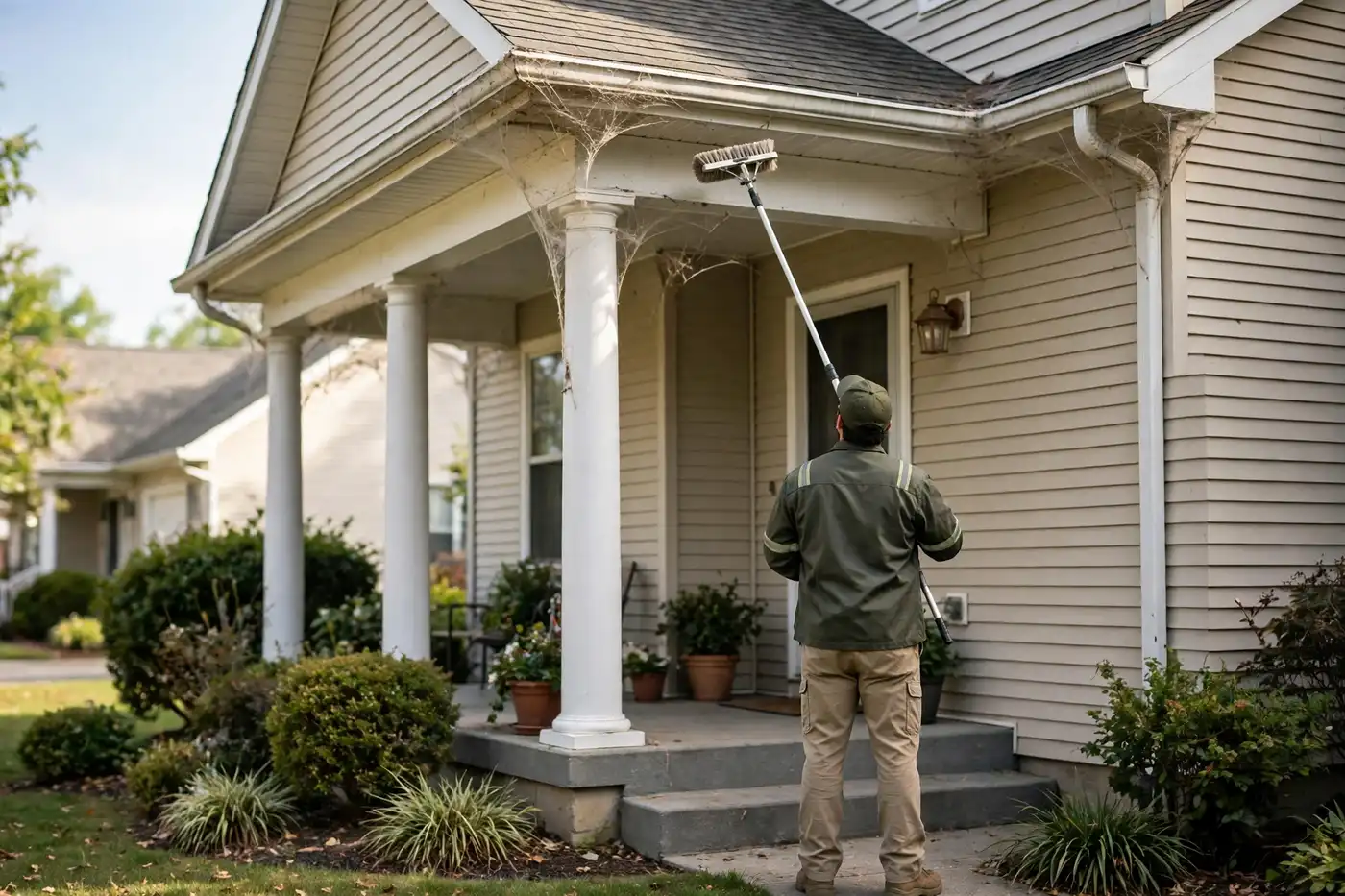
When you call PestReach USA about termite control & inspection, the call is routed to an independent local provider who does this work in your area. Three things speed everything up: where the activity is, when it started, and what you have already tried. On urgency: termite findings are not same-day emergencies — colonies work slowly — but swarm evidence is worth prompt inspection while it is fresh. The provider arranges the inspection directly with you, explains the plan and their terms before any work, and confirms their licence and insurance on request. PestReach USA does not set the provider's prices or schedule — but a problem described precisely reaches the right specialist first time, and that is worth more than any other shortcut.
One more thing worth knowing before you call: you do not need to have identified the pest yourself, and you do not need to have prepared anything beyond safe access to the area. Identification is the provider's first job, and preparation instructions — where any are needed — come from them, specific to the method they will use at your property. If you have photographs or notes about when the activity is worst, mention them; they help the inspector start in the right place.