The short version: Wildlife removal is eviction plus repair. Raccoons in the attic, squirrels in the soffits, bats in the eaves, skunks under the deck — the animal got in through a gap, a weak vent or an unguarded opening, and it leaves by the same kind of route, usually through a one-way door installed by a professional, after which every entry is sealed with materials the animal cannot chew or tear through. When you call through PestReach USA, we connect you with an independent local provider who handles wildlife specifically — this work is licensed and regulated differently from insect control in most states, and the seasons and species rules matter.
The animals that move into houses
Raccoons are the heavyweights: strong, dextrous and happy to tear a weak soffit or roof vent into an attic doorway, where a female raises kits in spring amid insulation she will shred and soil. Grey squirrels enter at roof edges and gable vents, gnaw constantly, and return obsessively; their smaller cousins, flying squirrels, slip in through gaps a finger wide and live noisily in walls across the Northeast and Midwest. Bats use quarter-inch slots along eaves and chimneys and form maternity colonies in attics through the summer. Skunks and opossums den under decks, porches and sheds; groundhogs excavate burrow systems that undermine slabs and foundations.
Snakes follow rodents and cool, damp shelter into basements, crawlspaces and foundation gaps — most are harmless species doing free rodent control, but they are unwelcome housemates regardless. Birds colonise bathroom and dryer vents, chimneys and eaves, blocking airflow and bringing mites with them. Each animal has a season (spring denning and bat maternity season dominate the calendar), a legal status, and a correct removal method, which is why wildlife work is a specialisation: the 'pest control' answer of trapping everything is often wrong, and sometimes illegal.
Why exclusion beats trapping alone
The one-way door is the heart of modern wildlife work: the animal exits at dusk to feed, the door swings shut behind it, and it cannot get back in. Before fitting it, the specialist seals every other gap so the door is the only way out, then checks that the attic is empty — critically, that no young remain inside. For bats, the same logic uses valves and netting at flight slots, timed outside the maternity season. For burrowing animals under decks, one-way doors plus buried mesh perimeters close the den for good.
This approach also respects the biology that generic trapping misses: remove a mother raccoon in May and you have created a starvation-and-odour problem inside the attic and an ethical failure. The professional sequence — inspect, identify, time it right, evict, seal, clean up if needed — looks slower than a trap in the yard and finishes the problem in a way the trap never does.
- A trapped animal leaves an open, scent-marked entry for the next one
- Relocation is restricted or illegal in many states and survival is poor
- One-way doors let mothers leave with their young in season
- Sealed entries solve the problem at the structure, permanently
- Exclusion avoids orphaned young dying inside walls and voids
The inspection: finding every door the animals use
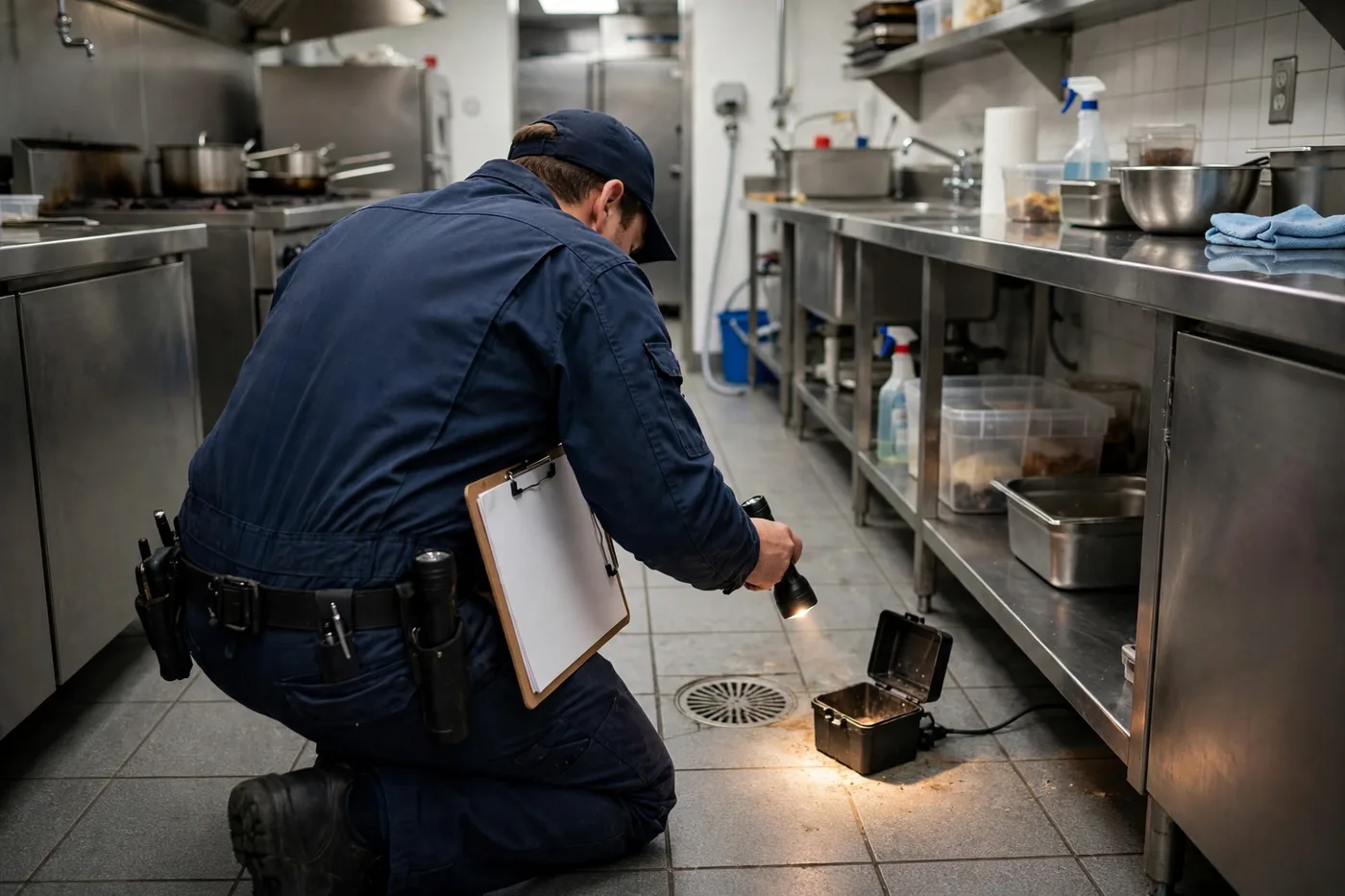
Wildlife entered through a structure that offered it a way. The inspection therefore walks the roof line as much as the attic: loose or missing vent screens, gaps where roof planes meet, rotten fascia, unguarded chimney flues, plumbing and utility penetrations, and (for diggers) the ground-level gaps at decks and additions. Inside, droppings, tracks, rub marks, nesting material and the location of latrines identify the species and how long it has been resident. Many homes have several entries — the animals use the easiest one; sealing only it diverts them to the second.
Expect the inspection findings to come with a repair list, because that list IS the service: metal flashing and hardware cloth over vents, chimney caps, sealed eave gaps, repaired soffits, mesh screening trenched around decks. A quote that only prices removals, per animal, with no entry repairs is pricing an annuity, not a solution. Cleanup is the third element where damage is heavy: contaminated insulation removal and sanitising are specialist tasks your provider will scope honestly, especially for raccoon latrines and bat guano accumulations.
Seasons and rules that shape wildlife work
Wildlife removal runs on a calendar and a rulebook. Bat exclusions are timed around maternity season — in most states the work happens in early spring or late summer and fall, never while pups cannot fly. Raccoon and squirrel evictions in spring must account for young in the den; professionals use techniques that reunite mothers with kits outside rather than separating them. Many states require specific permits or licences for wildlife control, restrict relocation, and protect bats and most birds outright. Snakes, skunks and other species each carry their own handling and transport rules.
This is the practical reason to use a dedicated wildlife provider rather than a general handyman or a DIY trap: mistakes here become legal problems, orphaned animals in walls, or a skunk spraying inside a crawlspace. When you call, describe the animal, where it is, and what you have heard or seen — sounds in the attic at night suggest raccoons or flying squirrels; daytime scratching suggests grey squirrels; thumping at dusk suggests bats leaving. That detail routes you to the right specialist with the right equipment.
Keeping wildlife out after removal
Wildlife problems cluster where homes offer food, water and an easy door. Most prevention is maintenance you would eventually do anyway — sound fascia, screened vents, capped chimneys — done before an animal discovers the weakness instead of after. In bat country, an autumn check of eaves and roof joints catches the gaps colonies will use next spring.
If you are hearing noises overhead, finding droppings in the attic, or watching a skunk commute under your deck each evening, do not wait for the animal to redecorate: attic damage and contamination compound weekly. Through PestReach USA we will connect you with a local wildlife specialist who will inspect, evict humanely and legally, and close the building behind the animal — the complete job, in the right order.
- Cap chimneys and screen all vents with metal mesh
- Repair rotten fascia and seal roof-line gaps promptly
- Screen deck and porch perimeters with buried mesh where diggers are active
- Remove outdoor pet food and secure garbage; manage bird feeders if raccoons are frequent
- Trim tree limbs back from the roof — squirrels and raccoons use them as bridges
- Control rodents: snakes follow food, and attics with mice invite everything
A closer look: the one-way door, and the week that follows
The one-way door looks unremarkable — a framed flap or cone of galvanised mesh fitted over an entry point — but its installation is the end of a careful sequence. First the structure is read like a map: every vent, gap, roof return and seam is catalogued, because the door only works if it is the last exit left open. Secondary entries are sealed with materials matched to the animal — a raccoon can tear through what stops a squirrel — and only then does the main entry get its door, angled so the animal's own weight and habit carry it out at dusk and the flap defeats its return.
The days after installation are a monitored argument. The specialist checks for the evidence of departure — tracks, the door's position, the silence of an attic that had a tenant — and, in spring, for the season's great complication: young left behind. A mother excluded from her kits will work at the structure with an urgency that finds any weakness in the sealing, which is why spring jobs build in retrieval or reunion steps that keep the family together outside rather than separated by a wall. A quiet attic at the follow-up check, with the door untampered and no new sign, is the verdict the whole method aims for.
Then comes the unglamorous half of the job: the permanent repair. Temporary sealing is replaced or backed with flashing, mesh and sound material; damaged vents are screened; the chimney gets its cap. Providers photograph this stage for the file for a practical reason — if anything returns, the photos divide the world into what was closed and what is new. The animal was the emergency; the carpentry is the cure.
How a wildlife removal request is handled
When you call PestReach USA about wildlife removal, the call is routed to an independent local provider who does this work in your area. Three things speed everything up: where the activity is, when it started, and what you have already tried. On urgency: an animal in living space is urgent; an animal in the attic is scheduled promptly but calmly — and spring jobs must account for young, so mention any signs of babies. The provider arranges the inspection directly with you, explains the plan and their terms before any work, and confirms their licence and insurance on request. PestReach USA does not set the provider's prices or schedule — but a problem described precisely reaches the right specialist first time, and that is worth more than any other shortcut.
One more thing worth knowing before you call: you do not need to have identified the pest yourself, and you do not need to have prepared anything beyond safe access to the area. Identification is the provider's first job, and preparation instructions — where any are needed — come from them, specific to the method they will use at your property. If you have photographs or notes about when the activity is worst, mention them; they help the inspector start in the right place.