The short version: Stinging-insect work is about the nest, not the insects you see flying. A local provider identifies the species — yellowjacket, paper wasp, hornet, carpenter bee or honey bee — locates the nest (including hidden colonies inside wall voids and underground), treats or removes it with protective equipment, and seals the entry so the site is not reused. Honey bees are handled differently: they are relocated alive by beekeepers wherever possible. When you call through PestReach USA, describe what you are seeing as precisely as you can, and we connect you with an independent local provider equipped for the job.
Which stinging insect is it?
Yellowjackets cause most of the trouble: ground-nesting colonies entered through a hole in the lawn, wall-void colonies behind siding announced by a faint scratching or ticking sound, and intense late-summer scavenging around food, drinks and bins. Paper wasps build open, umbrella-shaped nests under eaves, porch ceilings and railings; their colonies stay modest and they are comparatively tolerant until the nest is bumped or sprayed. Bald-faced hornets hang large grey football-shaped paper nests in trees and shrubs and defend a wide perimeter; European hornets nest in voids and hollow trees and are drawn to lights at night.
The gentle lookalikes matter too. Mud dauber wasps build mud tubes under eaves and in garages, are solitary, and almost never sting — their nests can usually be left or simply removed. Carpenter bees bore half-inch holes in decks, eaves and fascia to raise young; they rarely sting but the boring, repeated season after season (and the woodpeckers that follow), causes real damage. Honey bees arrive as a spring swarm — a football of bees clustered temporarily on a branch or fence — or establish a colony inside a wall, chimney or hollow tree, where the correct responder is a beekeeper. Mistaking honey bees for yellowjackets (or vice versa) sends the wrong specialist, so describing size, colour, nest type and location when you call genuinely helps.
Why nests get more dangerous as summer goes on
A nest starts in spring with a single queen. Through summer the colony grows exponentially — by late summer a yellowjacket ground nest can contain thousands of workers, food grows scarce, and the colony's defensive temperament peaks. This is why the nest you walked past in June becomes the one that cannot be mowed over in September, and why early treatment is categorically easier, cheaper in effort and safer: small colony, short job, minimal defensive response. It is also why autumn is the peak season for sting incidents at outdoor gatherings — scavenging yellowjackets plus sweet drinks plus bare feet on lawns over hidden ground nests.
If anyone in the home has a known venom allergy, treat any nest on the property as a priority job and keep distance until it is handled. For everyone else the rule is the same but calmer: do not probe, plug or spray into a nest entrance, keep children and pets away from the area, and note the flight path — where insects enter and leave — to tell the provider, who will want to find the nest by watching exactly that.
How professionals remove nests
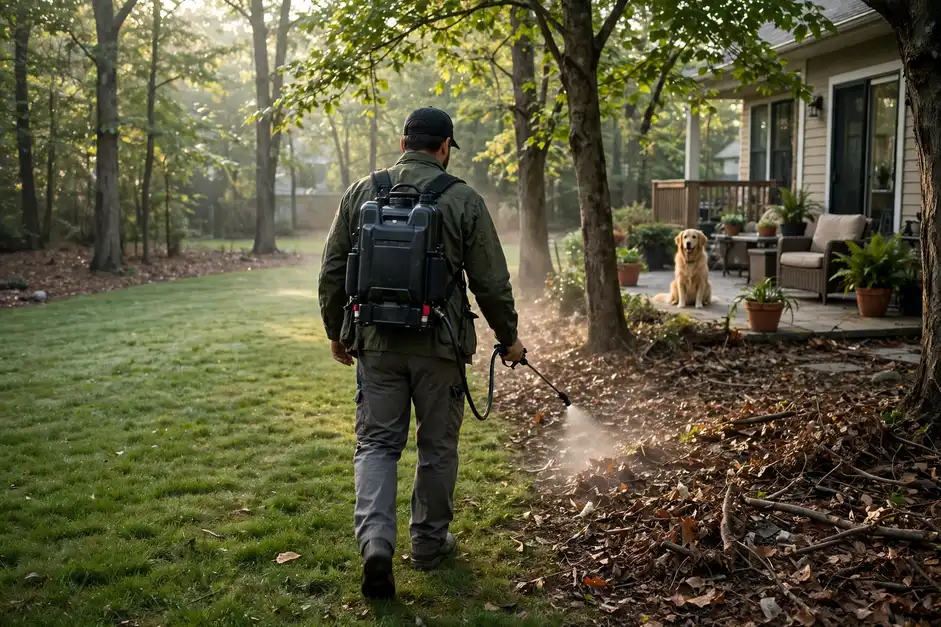
Professional removal works from the nest outward. For wall-void colonies, insecticidal dust applied into the nest through the entry (or a small drilled access) is the standard method, because dust reaches deep into the colony and workers carry it through; foams and liquids sprayed at an entrance can drive yellowjackets through the wall into the house — the classic DIY disaster. Ground nests are treated in the nest itself and the entrance is left unplugged until activity ceases, because a plugged live nest excavates a new exit, sometimes indoors. Aerial hornet and paper wasp nests are treated and then physically removed once activity stops, which also removes the pheromone-marked site that attracts next year's queens.
Timing and equipment are part of the method: work is often done in the cooler hours when most of the colony is home and sluggish, with full protective gear. Large hornet nests in trees, nests at height and colonies inside structures are the situations where the professional's ladders, reach equipment and insurance matter most. After treatment, activity should taper over a day or two (sometimes longer for very large void colonies); the provider will tell you the expected window and what counts as a reason to call back.
- Species identification and nest location (including void and ground nests)
- Treatment delivered into the nest itself — dusts for voids, targeted applications for aerial nests
- Protective equipment and timing that minimises defensive flight
- Nest removal where accessible, after activity has fully stopped
- Sealing of entry points so the site is not re-founded next season
Honey bees: relocation, not extermination
Honey bees get a different playbook because they are pollinators under real pressure and because a colony inside a structure is a construction problem, not just an insect problem. A swarm clustered in the open is transient — it will usually move on within a day or two — and local beekeepers will often collect it free or cheaply. An established colony in a wall or chimney needs a cut-out removal: opening the structure, removing bees and comb, cleaning the cavity and sealing it properly. Skipping the comb removal is the expensive mistake: abandoned honey melts and ferments, stains walls, and attracts wax moths, ants, roaches and rodents for years — and the scent draws new swarms back to the same cavity.
When you call about bees, the first question will be identification: honey bees are fuzzy, amber-and-brown and moderately sized; if the insects are slim, smooth, bright yellow-and-black and entering a hole in the ground or wall at a furious rate, you almost certainly have yellowjackets. Through PestReach USA, tell us which you think you have and we will route you toward the right kind of specialist — pest provider for wasps, bee removal for honey bees.
Carpenter bees and the quiet damage
Carpenter bees deserve a mention because they are often confused with bumblebees and are not a nest-removal problem. Females bore into unpainted or weathered wood — deck rails, eaves, fascia, wooden fences — to build brood tunnels, return to the same sites yearly, and expand the damage; woodpeckers then tear at the wood to reach the larvae. Treatment targets the individual holes with dust, followed by sealing and, most effectively, keeping wood painted or finished, which strongly discourages boring. The bees themselves are pollinators and poor stingers; the goal is protecting the wood, not waging war on the species.
A closer look: the wall-void nest, step by step
The wall-void yellowjacket nest is the job that best shows the difference between the professional method and the can of spray. The first step is confirmation: a steady two-way traffic at one gap in the siding, a faint ticking or rustling inside the wall on a quiet evening, sometimes a soft spot or staining where the colony's activity warms and wets the gypsum. Mapping matters because the nest is rarely directly behind the entry hole — colonies expand along the void, and treating the wrong bay leaves the queen untouched.
Treatment uses insecticidal dust drawn into the void through the entry itself or a discreet drilled access, because dust travels on the workers' bodies deep into the colony and keeps working as they move through it. The entry is then deliberately left open — sealing it at this stage is the error that drives survivors through the wall into the living space, converting an exterior job into an indoor emergency. Only when traffic has fully stopped, days later, is the entry sealed, and the homeowner is told what to watch for in the interval and what counts as a reason to call.
Whether the nest is then opened up and removed is a judgement the provider explains: a small colony in an accessible void may be worth extracting to prevent odour and secondary pests as it decays; a large one in an inaccessible run is usually left, monitored and sealed. Either way the sequence — confirm, treat in place, wait, seal, and only then consider removal — is the standard, and deviations from it are where wall-void jobs go wrong.
How a wasp, hornet & bee removal request is handled
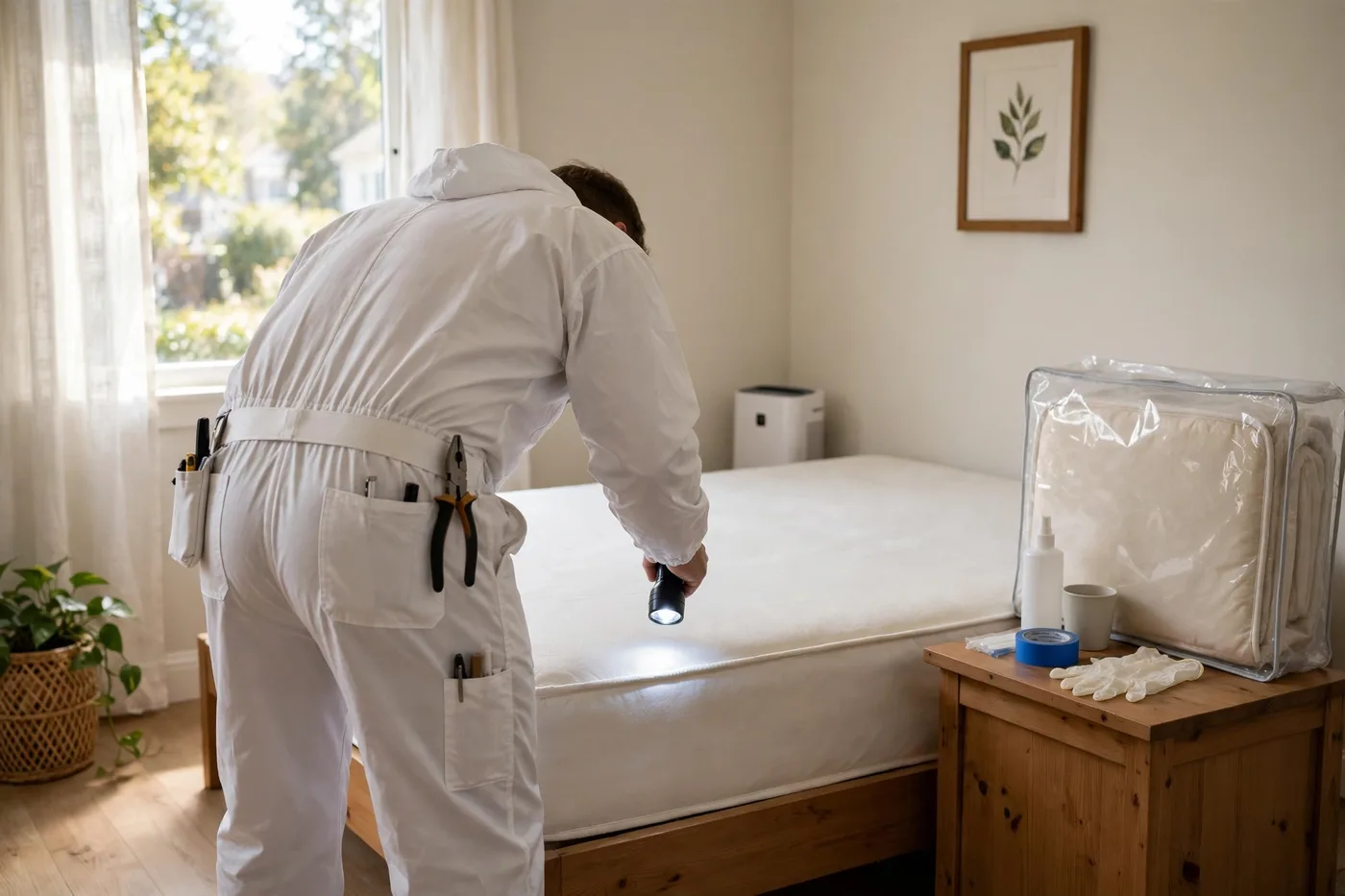
When you call PestReach USA about wasp, hornet & bee removal, the call is routed to an independent local provider who does this work in your area. Three things speed everything up: where the activity is, when it started, and what you have already tried. On urgency: an active nest near doors, play areas or anyone with a sting allergy is urgent; mention honey bees specifically, because those calls route to beekeepers. The provider arranges the inspection directly with you, explains the plan and their terms before any work, and confirms their licence and insurance on request. PestReach USA does not set the provider's prices or schedule — but a problem described precisely reaches the right specialist first time, and that is worth more than any other shortcut.
One more thing worth knowing before you call: you do not need to have identified the pest yourself, and you do not need to have prepared anything beyond safe access to the area. Identification is the provider's first job, and preparation instructions — where any are needed — come from them, specific to the method they will use at your property. If you have photographs or notes about when the activity is worst, mention them; they help the inspector start in the right place.