Homeowners deal with house mice, wasps and yellowjackets and crickets and earwigs — a pest calendar written by big temperature swings, wind and seasonal extremes that drive pests to structures for shelter. PestReach USA connects you with an independent local provider who starts with an inspection.
Phone lines: Mon-Fri 7:00 AM-10:00 PM ET | Sat 8:00 AM-10:00 PM ET | Sun 7:00 AM-9:00 PM ET
The pests that matter in Austin are the ones its climate feeds and its housing shelters — and both are predictable once you read them.
It adds up in the weather record: roughly 36 inches of precipitation annually, 124 days of 90°F-plus heat, and a yearly average temperature of about 68°F.
Across the Austin–Round Rock–San Marcos metro — about 2,620,945 people in 948,649 households — that pressure lands on housing of every age and type.
The Austin area is not one market but 5 counties and 14 communities of quite different housing — and pest work that ignores those differences underperforms. The guides on this site are built metro by metro from real data for that reason, and the providers in the network are local for the same reason.
House mice need a gap only the width of a pencil, nest close to food in walls and stored clutter, and breed fast enough that a fall invasion is a winter population. Trapping, sealed food storage and pencil-proof exclusion are the answer. Around Austin, mouse work is measured by the follow-up: traps checked, catches counted, and the entry points sealed in the same programme — a visit that only sets traps is understood locally to be half a job. More about rodent control.
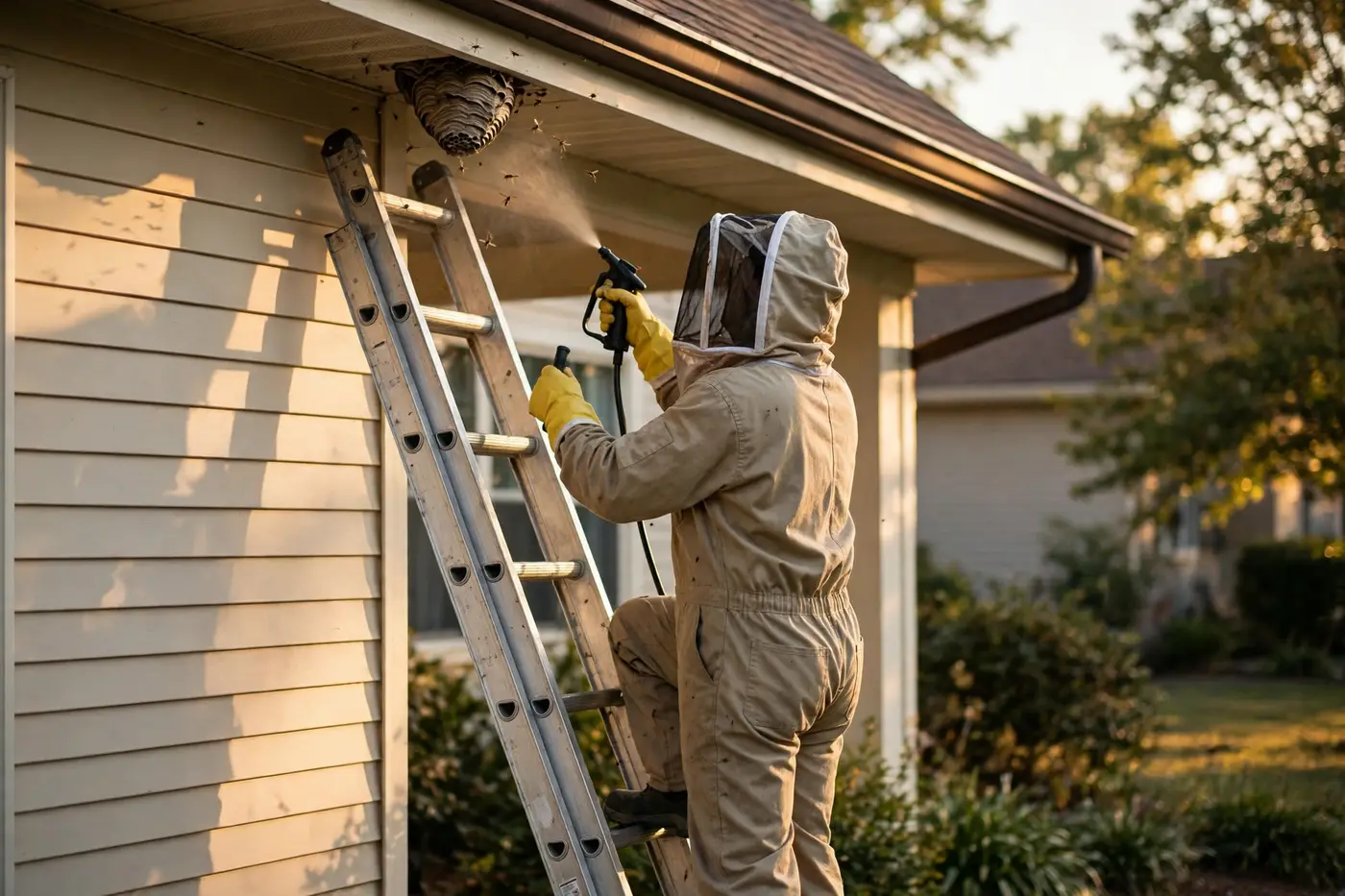
Paper wasps and yellowjackets are different problems sharing a name: open umbrella nests under eaves are one thing, a ground nest of yellowjackets beside a path is another — defensive, populous and best approached in protective gear at dusk. Providers identify the species first, because the method, the equipment and the follow-up all follow from it. In Austin, spring is the cheap season for this work: a queen founding a nest in April is a five-minute job that becomes a full colony, protective gear and a dusk appointment by August. More about wasp, hornet & bee removal.
Ground-level invaders — crickets, earwigs, millipedes — thrive in the mulch and moisture against foundations here, and drift indoors when weather pushes them. Barrier treatment plus drier, thinner foundation beds is the standard answer. Around Austin, the surge follows the season's turn: crickets crowd foundation lines and garage doors as nights cool, and the homes that seal and dry their crawlspaces early are the ones that skip the invasion. More about general pest control.
The species works quietly and socially — a mature colony can number in the hundreds of thousands, all fed through the same foraging territory under and around a home. Treatment is about breaking that territory: bait stations that workers carry back to the colony, or a treated soil zone, verified over follow-up visits rather than assumed. In Austin, inspectors probe the foundation line and any wood within reach of soil first, because that is where local colonies announce themselves — a single mud tube on an inside crawlspace wall is taken as seriously here as a swarm. More about termite control & inspection.
The fall invasion is a local ritual: stink bugs, boxelder bugs and cluster flies mass on sun-warmed siding and work into voids and attics for the winter. The battle is won with sealing and pre-season exterior treatment, not in January when they appear indoors. Austin providers book autumn early for a reason: once the first cold snap pushes stink bugs and lady beetles into the wall voids, the honest options narrow to waiting them out — the work that counts happens on the exterior, weeks before. More about general pest control.
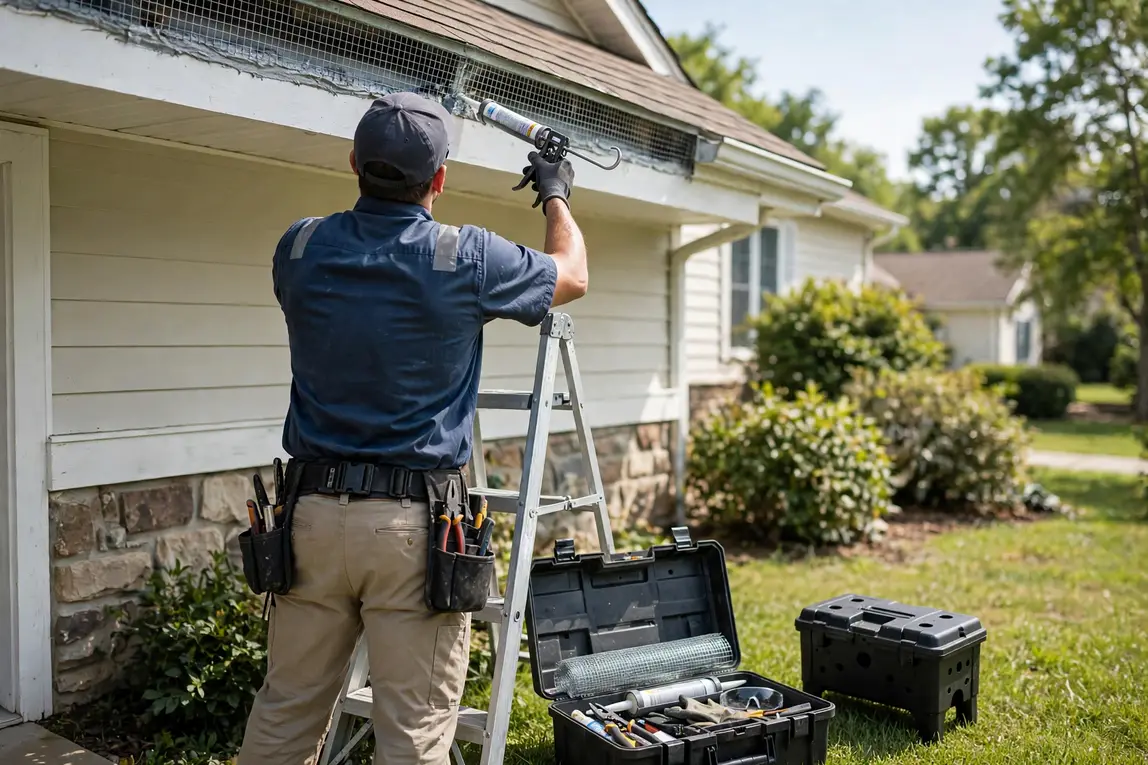
Attic wildlife is a standing issue in leafy neighbourhoods: raccoons tear in at weak roof points, squirrels gnaw through at the eaves, and both leave contamination behind. Eviction plus metal-and-mesh exclusion is how the story ends permanently. In Austin, wildlife calls follow the houses as much as the animals — roof junctions, vent stacks and soffit corners of a certain age are the entries, and the inspection reads the building before it reads the animal. More about wildlife removal.
Fleas run their life cycle in carpets, pet bedding and shaded yard soil — the biting adults on a pet are a small fraction of the infestation. Warm, humid conditions let them cycle nearly year-round, so pet, home and yard have to be treated together. In Austin homes the vacuum is part of the prescription: daily passes through the first fortnight shake flea pupae into hatching while the treatment is fresh, which is how the second generation gets caught instead of restarting the cycle. More about flea & tick control.
The German cockroach is the kitchen pest that defines professional patience: egg cases hatch for weeks, populations resist common sprays, and control means vacuuming, gel baits in the harbourages, and scheduled follow-ups until monitoring runs clean. Austin apartment and restaurant corridors are where German roaches travel best, and local programmes plan for adjoining units and follow-up visits from the first day, not as an afterthought. More about cockroach control.
Pest pressure here is seasonal, and the calendar matters more than any single treatment.
Spring: Spring storms wake up termites, ants and the season's first wasp queens.
Summer: Summer heat builds cricket, wasp and spider numbers, with rodents working barns, garages and foundations.
Autumn: Autumn pushes field pests and rodents toward heated structures in a broad front.
Winter: Winter is a mouse season pure and simple, when exclusion quality decides which homes stay quiet.
Summer heat is the organising fact in Austin: extreme temperatures push pests out of exposed ground and into the shade, irrigation and cooled voids of homes. Scorpions, roaches, ants and rodents all concentrate around structures precisely when people are using their yards most.
What the climate proposes, the housing stock disposes — construction and age decide which homes get hit.
Median construction year in the metro is 2000, which places a large share of homes squarely in the era of crawlspace vents, unsealed pipe chases and wood within reach of soil.
The building-era mix adds texture: about 29% of homes went up between 1980 and 1999, the era of slab and crawlspace suburbs, while 6% predate 1960 entirely. Each era has its pest signature — older homes leak at every joint; newer ones hide pests in foam, voids and landscape beds built tight against the walls.
Practical translation: exclusion — sealing, screening, sweeping — is worth as much as any treatment in homes of this vintage.
Before a visit, local providers ask for the basics: clear access to baseboards and problem rooms, pet bowls and toys picked up, and a note of where you have seen activity — the inspection follows your evidence.
Think of the Austin inspection as an audit with a torch and a ladder. Outside: the landscape against the walls, the state of the screens and seals, the wood stacked where it should not be. At the foundation: tubes, frass, rub marks, the pencil-width gaps that matter for house mice. Inside: the wet rooms, the voids behind them, then the attic and crawlspace for wasps and yellowjackets and whatever else the season has pushed in. The deliverable is a written map — what was found, where, and what the proposed programme does about each find, in order.

A word on choosing well in Austin: favour the provider who inspects before quoting, names the species before treating, and puts the plan — scope, schedule, what is excluded — in writing. Be cautious with anyone who quotes a full programme over the phone sight-unseen, or who leans on urgency. Pest problems here are real, but they are measured in days and weeks, not minutes, and a good local company knows it.
Providers in the network serve the Austin metro across 14 named communities and the surrounding suburbs. The largest include Austin (about 967,862 residents), Round Rock (about 124,288 residents), Georgetown (about 78,803 residents), Cedar Park (about 77,474 residents), San Marcos (about 68,920 residents), Leander (about 67,880 residents). Note how the list reads: these communities share one pest map — the same climate, the same housing eras, the same seasonal calendar — whatever their municipal boundaries say. A sample of ZIP codes covered locally:
If your ZIP is not listed, call anyway — coverage follows the metro area, not a fixed list, and new routes are added as local providers join.
The metro spans 5 counties. Each county page covers its local pest pressure and the city pages that serve it.
The metro's principal county is Bastrop County at about 888 square miles; altogether the 5 counties below cover roughly 4,220 square miles. The patchwork matters practically: licences are issued by the state, wildlife rules can vary, and a provider's route is planned county by county — the county pages below give each one its own pest reading.
Pest pressure is regional, and Austin's map shades into its neighbours': the San Antonio, TX metro lies about 72 miles away, Killeen–Temple, TX about 72, and College Station, TX about 79 — close enough that the same weather systems, and largely the same pest calendar, run across all of them. Providers stay local to their own metro, but the reading of the seasons is shared.
Tell us what you are seeing — ants in the kitchen, a nest under the eaves, scratching in the attic — and where you are located.
Your call is routed to an independent local pest control professional who serves your area and handles your type of problem.
The provider inspects, identifies the pest, explains the plan and its terms directly to you, and carries out the work.
The pests Austin homeowners call about most are house mice and wasps and yellowjackets, driven by big temperature swings, wind and seasonal extremes that drive pests to structures for shelter. That is as true in Austin as in central Austin — local providers plan by metro and county, not by neighbourhood lines. Termites and rodents cause the most expensive damage, while ants and cockroaches generate the most calls. A local inspection settles which problem your home actually has — the answer is often not the pest you expected.
PestReach USA is a referral service and does not set prices — your local provider quotes their own work after inspecting, because the honest price depends on the pest, the size of the property and whether the job is a one-off removal or a recurring programme. For Austin addresses that map runs across 5 counties, with Austin among the communities on regular routes. What we can tell you is what drives the figure: infestation size, access, treatment method and follow-up schedule. Be wary of any quote given without an inspection.
Yes — Austin sits in active termite country, where the combination of big temperature swings, wind and seasonal extremes that drive pests to structures for shelter keeps colonies feeding. In practice, routing follows the metro's real map: ZIP codes such as 76527 and communities like Austin are on local providers' regular runs. Subterranean termites are the main structural threat locally, and because they work out of sight, annual inspections are the standard recommendation for homes here regardless of age. Swarmers in spring, mud tubes on the foundation or hollow-sounding wood are all reasons to book an inspection promptly.
There is no single off-switch: pressure peaks from spring through autumn, with house mice leading the warm months, while indoor pests — cockroaches, bed bugs, rodents in the structure — stay active all year. For Austin addresses that map runs across 5 counties, with Austin among the communities on regular routes. The local pattern is set by big temperature swings, wind and seasonal extremes that drive pests to structures for shelter, so well-timed prevention ahead of your problem pest's peak is worth more than reaction after it.
With 20% of the metro's homes built before 1980, the recurring themes are pests of gaps and voids: rodents travelling wall voids, carpenter ants in moisture-damaged wood, and insects entering at settled joints and utility penetrations. In practice, routing follows the metro's real map: ZIP codes such as 76527 and communities like Austin are on local providers' regular runs. Older homes reward a thorough exclusion pass — sealing and screening — alongside any treatment.
Yes — attics are one of the most common work sites locally, whether the problem is roof rats, squirrels, bats, wasps or overwintering insects. That is as true in Austin as in central Austin — local providers plan by metro and county, not by neighbourhood lines. The correct response is inspection first: identify the animal or insect, find every entry point at the roof line, remove or evict what is there, and seal the entries so the attic stays empty. Treating without sealing is a subscription to the same problem.
Availability depends on the local provider's schedule and the urgency of the problem — stinging nests, rodents in living space and confirmed bed bug activity are normally prioritised. For Austin addresses that map runs across 5 counties, with Austin among the communities on regular routes. When you call, describe the problem precisely; PestReach USA routes you to a local provider who will give you their real earliest appointment rather than a promise we cannot keep.
Coverage follows the metro rather than the city limit: providers serve Austin itself — including ZIP codes such as 76527 — and the surrounding communities this page lists, from Austin outward across the metro's 5 counties. Locally that plays out street by street — providers cover 5 counties around Austin, including the area around Austin. If your address sits near the metro's edge, say so when you call; routing is done on the provider's actual service map, and the neighbouring metros listed on this page are covered by their own local providers if your property falls on that side of the line.
Call now — we will connect you with an independent local provider for an inspection and a clear plan.
Call NowMon-Fri 7:00 AM-10:00 PM ET | Sat 8:00 AM-10:00 PM ET | Sun 7:00 AM-9:00 PM ET