Ask what keeps Columbus providers busiest and the answer is carpenter ants, overwintering pests and house mice — pests written into the calendar by a climate where hot humid summers and deep-freeze winters that push pests indoors in waves. We connect you with a local independent provider who starts with an inspection.
Phone lines: Mon-Fri 7:00 AM-10:00 PM ET | Sat 8:00 AM-10:00 PM ET | Sun 7:00 AM-9:00 PM ET
Pest pressure in Columbus is not a mystery — it is the local climate, housing stock and landscape doing exactly what they do every year.
It adds up in the weather record: roughly 42 inches of precipitation annually, 21 days of 90°F-plus heat, and a yearly average temperature of about 54°F.
The Columbus area is home to roughly 2,242,028 people, and its 855,292 households share the same pest calendar.
Coverage in the Columbus metro follows the settlement pattern: 10 counties, 14 named communities and a housing stock that runs from historic cores to subdivisions still being framed. PestReach USA's role is to make the first step simple — one call, a clear description of the problem, and a connection to a provider who works those streets every week.
Carpenter ants excavate rather than eat wood: they hollow damp timber into smooth galleries for nesting, and the sawdust-like frass below a window or porch is often the first sign. Finding the parent colony — frequently in a tree, stump or woodpile outside — matters more than treating the satellite nest indoors, and that search is the core of a local inspection. In Columbus, a torch after dark is standard kit: the night trails along fences and deck rails show in minutes what a daytime visit guesses at, and the trail's end is usually the tree or stump holding the parent nest. More about ant control.
Each fall, overwintering insects — brown marmorated stink bugs, boxelder bugs, cluster flies and lady beetles — gather on sunny walls and slip into attics and wall voids to wait out winter, emerging into living rooms on warm days. Sealing and well-timed exterior treatment in late summer are the counters. Columbus providers book autumn early for a reason: once the first cold snap pushes stink bugs and lady beetles into the wall voids, the honest options narrow to waiting them out — the work that counts happens on the exterior, weeks before. More about general pest control.
Signs accumulate quietly: droppings in drawer corners, gnawed packaging, a musky smell in a warm void. Inspectors track the pattern to the entries — utility penetrations, garage door corners, gaps at the foundation — then trap out the population and close the routes, checking traps across follow-up visits until the signs stop. In Columbus, the autumn rush is predictable: the first cold nights send mice testing every gap at grade, and the homes that stay quiet are the ones sealed in September. More about rodent control.
Brown recluses are exactly that — reclusive: they favour undisturbed storage, closets, voids and boxes, and most homes in their range that have them never produce a bite. Management is about reducing contact: glue traps map where they travel, clutter and stored clothing are addressed, and treatment targets the harbourages rather than open floor space. In Columbus, the honest first move is confirmation — most brown spiders blamed as recluses are not — and only then a programme built on trap data from the quiet corners where this species actually lives. More about spider control.
Subterranean termites are the region's main structural threat: colonies live in the soil and reach wood through mud tubes, feeding out of sight inside framing and subfloors. Warm, moist soil lets them stay active most of the year, and spring swarms after rain are the classic first sign homeowners notice. In Columbus, the annual inspection is treated as a standing appointment for a reason — colonies here forage year-round underground, and the gap between a clean report and a mud tube can be a single season of quiet feeding. More about termite control & inspection.
Nests grow all season from a single queen's spring start, so a nest found in August may hold thousands. Local work treats the nest directly, removes it where it is inside a structure — an occupied wall void can push wasps indoors if it is only sealed — and advises on the eaves, vents and gaps to close before next season's queens prospect. By late summer in Columbus, mowing crews and meter readers find the ground nests the hard way; local advice is to flag any nest you spot in spring, when it holds a queen and a handful of workers. More about wasp, hornet & bee removal.
Bed bugs are hitchhikers, not hygiene failures: they arrive in luggage, furniture and belongings, then harbour in mattress seams, bed frames and upholstery within a few feet of where people sleep. Treatment is meticulous by nature — preparation of the rooms, targeted application or heat, encasements, and a follow-up inspection, because eggs hatch on their own schedule. A Columbus inspection for this pest works outward from the bed in a spiral — seams, frame, headboard, then upholstery and baseboards — because the map of where they are decides the whole programme, room by room. More about bed bug treatment.
The entry point is the diagnosis: a lifted vent, a gnawed soffit corner, a gap where two roofs meet. Local work follows a sequence — confirm the species and whether young are present, remove or evict, exclude with materials the animal cannot chew through, and sanitise the droppings and nesting that carry their own hazards. In Columbus, the sequence is strict: identify the animal and check for young, evict or trap within state rules, then exclude — because sealing first can trap an animal inside the structure, which helps no one. More about wildlife removal.
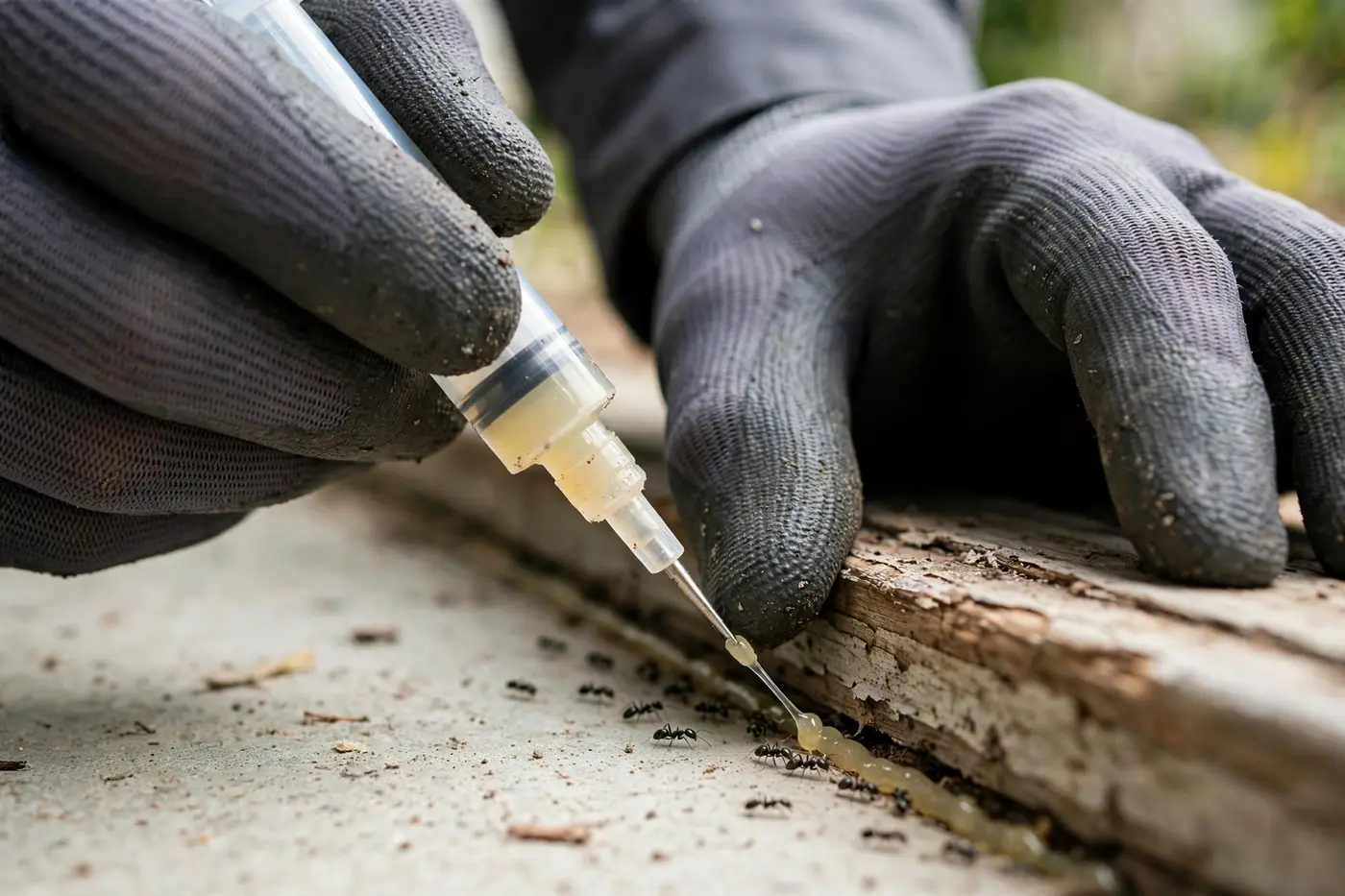

Knowing which pest peaks when is half of local control; this is the Columbus pattern.
Spring: Spring thaws bring carpenter ants, termite activity in the southern tier, and the first wasp queens founding nests.
Summer: Summer is broad-spectrum: mosquitoes, ants, wasps and spiders all at strength.
Autumn: Autumn is the great sealing test — stink bugs, boxelder bugs, cluster flies and mice all looking for a way in.
Winter: Deep winter drives the rodent workload and exposes every weakness in a home's exclusion.
The freeze pattern defines the year in Columbus: once sustained cold arrives, outdoor insect activity collapses and the workload moves indoors and into walls, where rodents and overwintering insects ride out the season. The practical consequence is that autumn exclusion — sealing, screening, sweeping — decides how quiet a Columbus winter stays.
What the climate proposes, the housing stock disposes — construction and age decide which homes get hit.
Roughly 61% of households own their homes, and the stock is a real mix: 49% built before 1980 alongside 25% built since 2000, so brand-new subdivisions and mid-century streets sit on the same pest map.
Vacancy and turnover play a role too: with 915,425 housing units against 855,292 households, the metro carries the usual share of empty and between-tenant properties — and undisturbed homes are where bed bugs wait out vacancies, rodents nest unnoticed and termite damage runs longest before discovery.
Practical translation: exclusion — sealing, screening, sweeping — is worth as much as any treatment in homes of this vintage.
What helps most is information: when the activity started, where it concentrates, and what has already been tried. Providers build the first inspection around exactly that.
Providers describe a proper Columbus inspection as three questions answered in order. What is it — species identified, not guessed, because carpenter ants and overwintering pests need entirely different programmes. Where is it living — nest, harbourage or entry, found and shown to you, not assumed. And what is feeding it — the moisture, food, shelter or access that let it establish, because treating the pest without the condition invites the sequel. The written plan that follows from those answers is the document to judge any provider by in Columbus: specific about places and methods, honest about timelines, and plain about what follow-up is included.

A word on choosing well in Columbus: favour the provider who inspects before quoting, names the species before treating, and puts the plan — scope, schedule, what is excluded — in writing. Be cautious with anyone who quotes a full programme over the phone sight-unseen, or who leans on urgency. Pest problems here are real, but they are measured in days and weeks, not minutes, and a good local company knows it.
Providers in the network serve the Columbus metro across 14 named communities and the surrounding suburbs. The largest include Columbus (about 906,480 residents), Newark (about 50,393 residents), Dublin (about 49,031 residents), Delaware (about 43,168 residents), Grove City (about 41,831 residents), Reynoldsburg (about 41,032 residents). Note how the list reads: these communities share one pest map — the same climate, the same housing eras, the same seasonal calendar — whatever their municipal boundaries say. A sample of ZIP codes covered locally:
If your ZIP is not listed, call anyway — coverage follows the metro area, not a fixed list, and new routes are added as local providers join.
The metro spans 10 counties. Each county page covers its local pest pressure and the city pages that serve it.
The metro's principal county is Delaware County at about 443 square miles; altogether the 10 counties below cover roughly 4,797 square miles. The patchwork matters practically: licences are issued by the state, wildlife rules can vary, and a provider's route is planned county by county — the county pages below give each one its own pest reading.
Look outward from Columbus and the pattern continues: Dayton, OH (about 69 miles), Canton, OH (about 99) and Cincinnati, OH (about 111) run on much the same pest calendar, driven by the same regional climate. If your property sits between metros, the pages below route you to the one whose providers actually work your address.
Tell us what you are seeing — ants in the kitchen, a nest under the eaves, scratching in the attic — and where you are located.
Your call is routed to an independent local pest control professional who serves your area and handles your type of problem.
The provider inspects, identifies the pest, explains the plan and its terms directly to you, and carries out the work.
The pests Columbus homeowners call about most are carpenter ants and overwintering pests, driven by hot humid summers and deep-freeze winters that push pests indoors in waves. Homeowners near Columbus hear the same guidance: the metro's providers work the whole area, ZIP 43001 included. Termites and rodents cause the most expensive damage, while ants and cockroaches generate the most calls. A local inspection settles which problem your home actually has — the answer is often not the pest you expected.
PestReach USA is a referral service and does not set prices — your local provider quotes their own work after inspecting, because the honest price depends on the pest, the size of the property and whether the job is a one-off removal or a recurring programme. That is as true in Columbus as in central Columbus — local providers plan by metro and county, not by neighbourhood lines. What we can tell you is what drives the figure: infestation size, access, treatment method and follow-up schedule. Be wary of any quote given without an inspection.
Yes — Columbus sits in active termite country, where the combination of hot humid summers and deep-freeze winters that push pests indoors in waves keeps colonies feeding. For Columbus addresses that map runs across 10 counties, with Columbus among the communities on regular routes. Subterranean termites are the main structural threat locally, and because they work out of sight, annual inspections are the standard recommendation for homes here regardless of age. Swarmers in spring, mud tubes on the foundation or hollow-sounding wood are all reasons to book an inspection promptly.
There is no single off-switch: pressure peaks from spring through autumn, with carpenter ants leading the warm months, while indoor pests — cockroaches, bed bugs, rodents in the structure — stay active all year. In practice, routing follows the metro's real map: ZIP codes such as 43001 and communities like Columbus are on local providers' regular runs. The local pattern is set by hot humid summers and deep-freeze winters that push pests indoors in waves, so well-timed prevention ahead of your problem pest's peak is worth more than reaction after it.
Many Columbus homes benefit from it, because the exterior barrier that stops most invaders weathers down over one to three months and pest pressure here is not confined to one season. Around Columbus, the same answer holds from the core out to Columbus — the providers' routes, not the city limit, define the map. Homes with lighter pressure — newer construction, few entry points, no history of infestation — may do well with seasonal or as-needed service. An inspection gives you the honest read for your property.
With 49% of the metro's homes built before 1980, the recurring themes are pests of gaps and voids: rodents travelling wall voids, carpenter ants in moisture-damaged wood, and insects entering at settled joints and utility penetrations. That is as true in Columbus as in central Columbus — local providers plan by metro and county, not by neighbourhood lines. Older homes reward a thorough exclusion pass — sealing and screening — alongside any treatment.
Availability depends on the local provider's schedule and the urgency of the problem — stinging nests, rodents in living space and confirmed bed bug activity are normally prioritised. In practice, routing follows the metro's real map: ZIP codes such as 43001 and communities like Columbus are on local providers' regular runs. When you call, describe the problem precisely; PestReach USA routes you to a local provider who will give you their real earliest appointment rather than a promise we cannot keep.
Coverage follows the metro rather than the city limit: providers serve Columbus itself — including ZIP codes such as 43001 — and the surrounding communities this page lists, from Columbus outward across the metro's 10 counties. In practice, routing follows the metro's real map: ZIP codes such as 43001 and communities like Columbus are on local providers' regular runs. If your address sits near the metro's edge, say so when you call; routing is done on the provider's actual service map, and the neighbouring metros listed on this page are covered by their own local providers if your property falls on that side of the line.
Call now — we will connect you with an independent local provider for an inspection and a clear plan.
Call NowMon-Fri 7:00 AM-10:00 PM ET | Sat 8:00 AM-10:00 PM ET | Sun 7:00 AM-9:00 PM ET