Bark scorpions, drywood termites and roof rats lead the local call log — the predictable result of a metro where extreme summer heat, very low rainfall and pests adapted to shelter in and around homes. PestReach USA routes you to an independent provider who inspects first.
Phone lines: Mon-Fri 7:00 AM-10:00 PM ET | Sat 8:00 AM-10:00 PM ET | Sun 7:00 AM-9:00 PM ET
Ask a Las Vegas homeowner what pest they battle and you will hear the same few names, because the metro's climate and housing write the same script street after street.
Local weather data tells the story — around 4 inches of annual rain, about 136 days a year reaching 90°F, and an average temperature near 69°F.
The Las Vegas–Henderson–North Las Vegas area is home to roughly 2,407,226 people, and its 847,378 households share the same pest calendar.
Coverage in the Las Vegas metro follows the settlement pattern: 1 counties, 14 named communities and a housing stock that runs from historic cores to subdivisions still being framed. PestReach USA's role is to make the first step simple — one call, a clear description of the problem, and a connection to a provider who works those streets every week.
Bark scorpions are the desert's signature pest: they shelter by day under bark, rocks and debris, hunt at night, climb walls readily, and come indoors after heat, rain or when their prey moves in. Sealing entry gaps, removing harbourage and reducing their insect food supply are the foundations of control. The blacklight walk is the Las Vegas standard: after dark, scorpions fluoresce along wall bases, rock borders and woodpiles, and that map — not the one indoor sighting — decides where harbourage is removed and treatment placed. More about general pest control.
Drywood termites are the quiet specialists of warm, dry country: they colonise wood directly — eaves, trim, framing, furniture — and reveal themselves mainly through piles of seed-like frass beneath kick-out holes. Localised colonies are treated very differently from soil termites, so identification comes first. Local experience in Las Vegas says check the attic before the living room: pellets raining from vents and rafters have usually been falling for a season or more before anyone connects them to the tidy piles on the floor below. More about termite control & inspection.
Roof rats treat the neighbourhood's fences and tree canopy as highways into attics. Once inside they shred insulation and gnaw wiring; the durable fix is a trapping programme combined with proper exclusion at every eave, vent and roof return. In Las Vegas, the roofline is the front door: inspectors walk the eaves looking for the greasy rub marks and the thumbnail gap at a vent or soffit that a rat uses nightly, and sealing that gap is the heart of the job. More about rodent control.
Black widows choose undisturbed corners: meter boxes, woodpiles, garage clutter, the undersides of stored items. They are shy and bites are uncommon, but their webs — strong, irregular, with a distinctive crackle — mark exactly where people reach without looking. Providers remove webs and egg sacs directly and treat the harbourages, then advise on the clutter pattern that invites them back. In Las Vegas, providers work the reach-in places methodically — meter boxes, valve covers, the undersides of stored items — clearing webs and egg sacs by hand, because that mechanical removal is what breaks this spider's cycle. More about spider control.
Crickets, earwigs and similar ground-level invaders build up in mulch, leaf litter and damp foundation zones, then move inside in late summer and during wet spells. They are handled by the exterior barrier, habitat thinning against the foundation, and sealing the gaps at grade. Around Las Vegas, cricket and earwig pressure builds in the mulch line against the house; thinning that bed back and drying the foundation zone does half the treatment's work. More about general pest control.
The little dark ants trailing through kitchens here are usually odorous house ants. They run multiple connected nests indoors and out, feed on sweets and honeydew, and respond to baiting and non-repellent treatment rather than surface sprays, which simply move them. Las Vegas kitchens see them at sinks and pet bowls first; local treatment follows the trail back through wall voids to the mulch and stone beds the colonies actually live in. More about ant control.
Nests grow all season from a single queen's spring start, so a nest found in August may hold thousands. Local work treats the nest directly, removes it where it is inside a structure — an occupied wall void can push wasps indoors if it is only sealed — and advises on the eaves, vents and gaps to close before next season's queens prospect. By late summer in Las Vegas, mowing crews and meter readers find the ground nests the hard way; local advice is to flag any nest you spot in spring, when it holds a queen and a handful of workers. More about wasp, hornet & bee removal.
House mice are the year-round indoor rodent: small, curious, and able to enter through gaps most homeowners would swear were sealed. Their control is won at the entry points and the pantry shelf as much as at the trap. In Las Vegas, the autumn rush is predictable: the first cold nights send mice testing every gap at grade, and the homes that stay quiet are the ones sealed in September. More about rodent control.
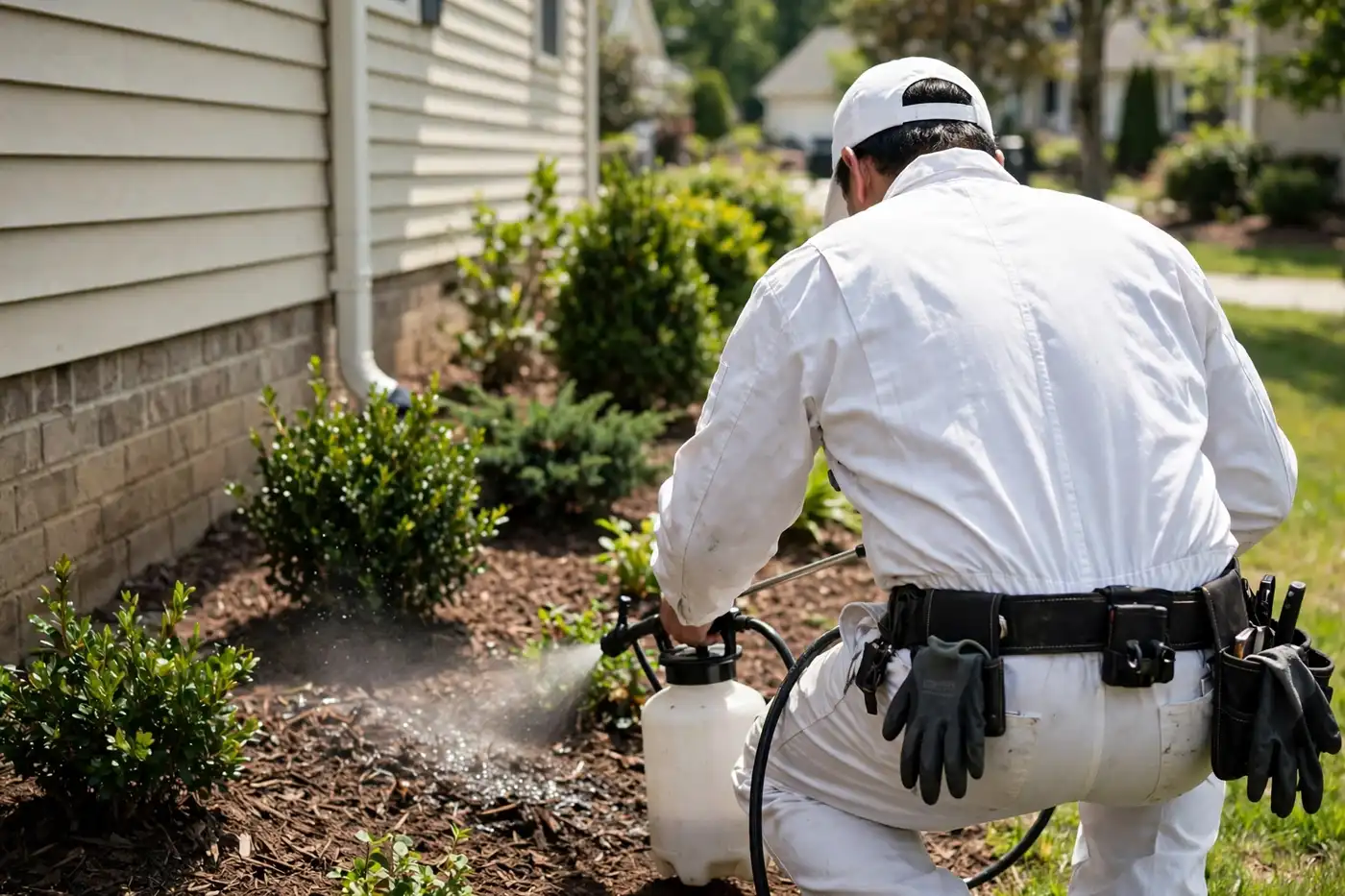
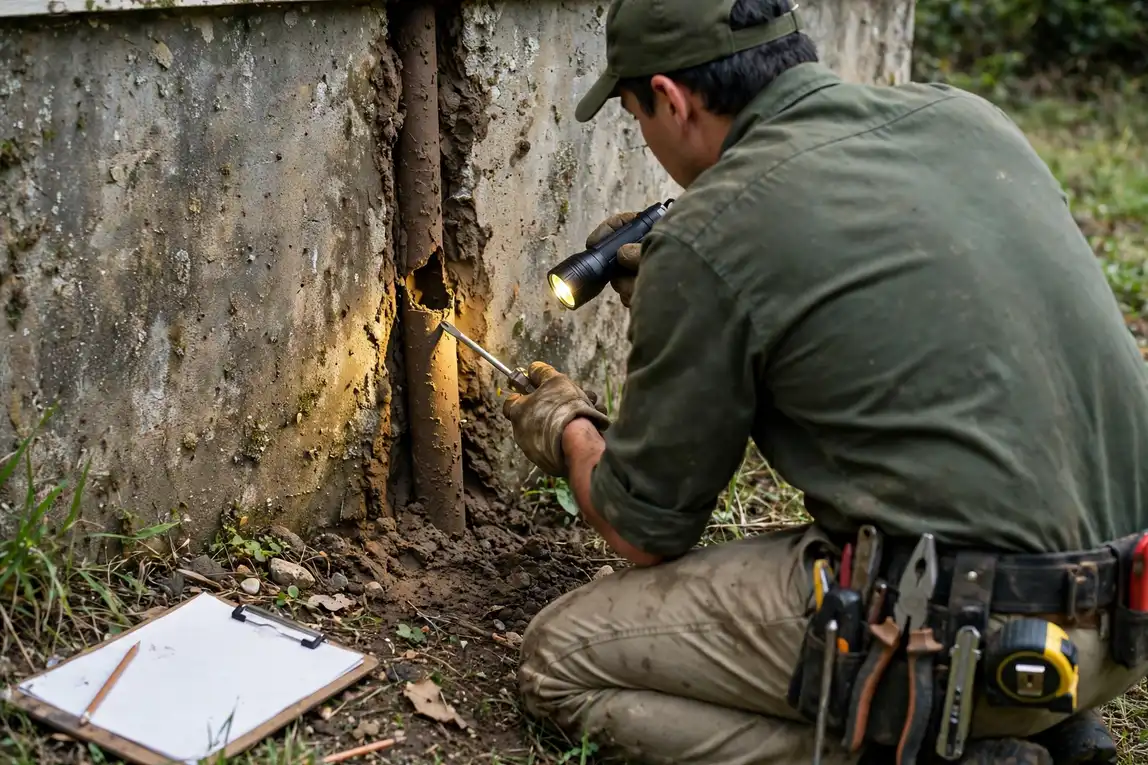
Knowing which pest peaks when is half of local control; this is the Las Vegas pattern.
Spring: Spring wakes the desert up: scorpions become active, ants trail, and termite inspections turn up colonies that fed all winter.
Summer: Summer heat drives everything toward the house's shade, irrigation and cool voids — scorpions, roof rats, roaches and crickets peak around structures.
Autumn: Autumn — including the monsoon pattern where it applies — flushes pests out of flooded harbourage and into homes in waves.
Winter: Winter slows the desert down but does not empty it; indoor rodents and pantry pests carry the quiet months.
Las Vegas's long, hot summer compresses pest behaviour around one resource — relief from the heat. Irrigated landscaping, shaded foundations and air-conditioned voids become the habitat, which is why summer service here focuses so hard on the perimeter and the entry points.
Housing decides how that pressure plays out at a specific address.
About 18% of the metro's homes were built before 1980, and 3% before 1960 — older framing means more gaps, more settled joints, and more of the hidden voids pests travel through.
The building-era mix adds texture: about 39% of homes went up between 1980 and 1999, the era of slab and crawlspace suburbs, while 3% predate 1960 entirely. Each era has its pest signature — older homes leak at every joint; newer ones hide pests in foam, voids and landscape beds built tight against the walls.
Practical translation: exclusion — sealing, screening, sweeping — is worth as much as any treatment in homes of this vintage.
What helps most is information: when the activity started, where it concentrates, and what has already been tried. Providers build the first inspection around exactly that.
A local inspection in Las Vegas follows the pests, not a script. Outside, the technician reads the foundation line, mulch beds, eaves and utility entries for bark scorpions and drywood termites first, because those are the metro's headline problems; inside, the route runs through the kitchen and bathroom plumbing, the attic and any crawlspace or basement the home has. What they write down — species, entry points, conducive conditions — is what the treatment plan gets built on, and it is why two neighbouring homes can legitimately end up with different programmes.

A word on choosing well in Las Vegas: favour the provider who inspects before quoting, names the species before treating, and puts the plan — scope, schedule, what is excluded — in writing. Be cautious with anyone who quotes a full programme over the phone sight-unseen, or who leans on urgency. Pest problems here are real, but they are measured in days and weeks, not minutes, and a good local company knows it.
Providers in the network serve the Las Vegas metro across 14 named communities and the surrounding suburbs. The largest include Las Vegas (about 650,873 residents), Henderson (about 324,523 residents), North Las Vegas (about 270,773 residents), Enterprise (about 232,043 residents), Spring Valley (about 219,913 residents), Sunrise Manor (about 199,099 residents). Note how the list reads: these communities share one pest map — the same climate, the same housing eras, the same seasonal calendar — whatever their municipal boundaries say. A sample of ZIP codes covered locally:
If your ZIP is not listed, call anyway — coverage follows the metro area, not a fixed list, and new routes are added as local providers join.
The metro spans 1 counties. Each county page covers its local pest pressure and the city pages that serve it.
The metro's principal county is Clark County at about 7,892 square miles; altogether the 1 counties below cover roughly 7,892 square miles. The patchwork matters practically: licences are issued by the state, wildlife rules can vary, and a provider's route is planned county by county — the county pages below give each one its own pest reading.
Look outward from Las Vegas and the pattern continues: Reno, NV (about 343 miles), Lake Havasu City, AZ (about 79) and St. George, UT (about 111) run on much the same pest calendar, driven by the same regional climate. If your property sits between metros, the pages below route you to the one whose providers actually work your address.
Tell us what you are seeing — ants in the kitchen, a nest under the eaves, scratching in the attic — and where you are located.
Your call is routed to an independent local pest control professional who serves your area and handles your type of problem.
The provider inspects, identifies the pest, explains the plan and its terms directly to you, and carries out the work.
The pests Las Vegas homeowners call about most are bark scorpions and drywood termites, driven by extreme summer heat, very low rainfall and pests adapted to shelter in and around homes. Around Las Vegas, the same answer holds from the core out to Las Vegas — the providers' routes, not the city limit, define the map. Termites and rodents cause the most expensive damage, while ants and cockroaches generate the most calls. A local inspection settles which problem your home actually has — the answer is often not the pest you expected.
PestReach USA is a referral service and does not set prices — your local provider quotes their own work after inspecting, because the honest price depends on the pest, the size of the property and whether the job is a one-off removal or a recurring programme. That is as true in Las Vegas as in central Las Vegas — local providers plan by metro and county, not by neighbourhood lines. What we can tell you is what drives the figure: infestation size, access, treatment method and follow-up schedule. Be wary of any quote given without an inspection.
Yes — Las Vegas sits in active termite country, where the combination of extreme summer heat, very low rainfall and pests adapted to shelter in and around homes keeps colonies feeding. In practice, routing follows the metro's real map: ZIP codes such as 89002 and communities like Las Vegas are on local providers' regular runs. Subterranean termites are the main structural threat locally, and because they work out of sight, annual inspections are the standard recommendation for homes here regardless of age. Swarmers in spring, mud tubes on the foundation or hollow-sounding wood are all reasons to book an inspection promptly.
There is no single off-switch: pressure peaks from spring through autumn, with bark scorpions leading the warm months, while indoor pests — cockroaches, bed bugs, rodents in the structure — stay active all year. Homeowners near Las Vegas hear the same guidance: the metro's providers work the whole area, ZIP 89002 included. The local pattern is set by extreme summer heat, very low rainfall and pests adapted to shelter in and around homes, so well-timed prevention ahead of your problem pest's peak is worth more than reaction after it.
Many Las Vegas homes benefit from it, because the exterior barrier that stops most invaders weathers down over one to three months and pest pressure here is not confined to one season. Homeowners near Las Vegas hear the same guidance: the metro's providers work the whole area, ZIP 89002 included. Homes with lighter pressure — newer construction, few entry points, no history of infestation — may do well with seasonal or as-needed service. An inspection gives you the honest read for your property.
With 18% of the metro's homes built before 1980, the recurring themes are pests of gaps and voids: rodents travelling wall voids, carpenter ants in moisture-damaged wood, and insects entering at settled joints and utility penetrations. Homeowners near Las Vegas hear the same guidance: the metro's providers work the whole area, ZIP 89002 included. Older homes reward a thorough exclusion pass — sealing and screening — alongside any treatment.
Yes — attics are one of the most common work sites locally, whether the problem is roof rats, squirrels, bats, wasps or overwintering insects. Homeowners near Las Vegas hear the same guidance: the metro's providers work the whole area, ZIP 89002 included. The correct response is inspection first: identify the animal or insect, find every entry point at the roof line, remove or evict what is there, and seal the entries so the attic stays empty. Treating without sealing is a subscription to the same problem.
Preparation depends on the pest, and your provider will give you a specific list — but the pattern in Las Vegas homes is consistent: clear access to baseboards, sinks and the areas where activity was seen; put food, utensils and pet bowls away; arrange for pets and children to be out of treated rooms for the period the provider specifies. Locally that plays out street by street — providers cover 1 counties around Las Vegas, including the area around Las Vegas. For rodents and wildlife, note where you have heard or seen activity and when. None of this is busywork — preparation is the difference between treatment reaching the harbourage and treatment reaching only the open floor.
Call now — we will connect you with an independent local provider for an inspection and a clear plan.
Call NowMon-Fri 7:00 AM-10:00 PM ET | Sat 8:00 AM-10:00 PM ET | Sun 7:00 AM-9:00 PM ET