Phone lines open: Mon-Fri 7:00 AM-10:00 PM ET | Sat 8:00 AM-10:00 PM ET | Sun 7:00 AM-9:00 PM ETCall Now

Pest Control in Baton Rouge, LA

Ask what keeps Baton Rouge providers busiest and the answer is subterranean termites, Formosan termites and mosquitoes — pests written into the calendar by a climate where long, hot, humid summers and mild winters that let pests breed nearly year-round. We connect you with a local independent provider who starts with an inspection.

Phone lines: Mon-Fri 7:00 AM-10:00 PM ET | Sat 8:00 AM-10:00 PM ET | Sun 7:00 AM-9:00 PM ET

Pest control in Baton Rouge

Every metro has a pest signature, and Baton Rouge's is written by its weather: long, hot, humid summers and mild winters that let pests breed nearly year-round.

Local weather data tells the story — around 62 inches of annual rain, about 96 days a year reaching 90°F, and an average temperature near 68°F.

The Baton Rouge area is home to roughly 888,699 people, and its 326,145 households share the same pest calendar.

What ties the Baton Rouge metro together — 14 communities across 10 counties — is the shared climate overhead and the shared housing eras underfoot. What separates one address from the next is construction, landscaping and moisture, which is why everything here starts with an inspection of the specific property rather than a metro-wide prescription.

The pests Baton Rouge homes deal with

Subterranean termites

The species works quietly and socially — a mature colony can number in the hundreds of thousands, all fed through the same foraging territory under and around a home. Treatment is about breaking that territory: bait stations that workers carry back to the colony, or a treated soil zone, verified over follow-up visits rather than assumed. In Baton Rouge, inspectors probe the foundation line and any wood within reach of soil first, because that is where local colonies announce themselves — a single mud tube on an inside crawlspace wall is taken as seriously here as a swarm. More about termite control & inspection.

Formosan termites

Because a Formosan colony can feed from several nests at once, partial treatment simply moves the problem. Providers here map every carton nest they can find, treat the structure and the soil as one system, and monitor — the follow-up data, not the first visit, is what shows the colony is actually declining. Locally, Formosan pressure concentrates where moisture collects in walls and roofs; Baton Rouge providers check those voids deliberately rather than assuming a soil-only problem. More about termite control & inspection.

Mosquitoes

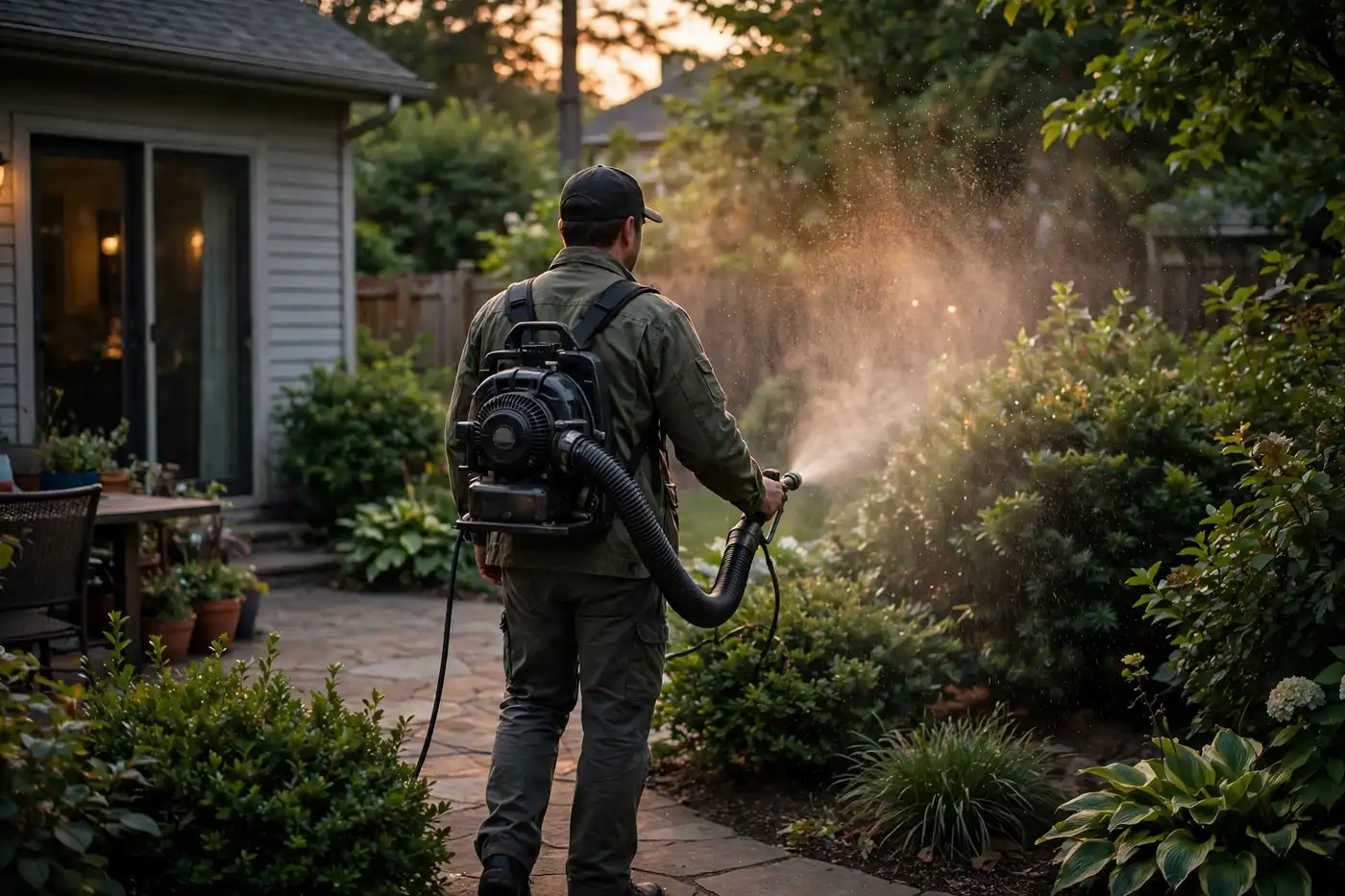
The yard is the battleground: adults rest in shaded vegetation by day and feed at dawn and dusk. Local services treat those resting zones, tip or treat breeding water that cannot be removed, and advise on the screens, fans and drainage that lower numbers between visits — suppression measured in bite counts, not promises. The Baton Rouge yard audit is measured in minutes: gutters, saucers, toys, tarp folds — every container holding water is a nursery, and tipping them is counted as part of the treatment, not advice on the side. More about mosquito control.

Red imported fire ants

The sting is the signature, but the damage list is longer: colonies invade electrical boxes, pad-mounted equipment and irrigation controls, shorting what they nest in. Local treatment plans account for that — bait timed to foraging activity in the cooler parts of the day, mounds treated directly, and equipment housings checked as part of the visit. In Baton Rouge, the pattern providers plan around is the post-rain surge — fresh mounds along drives, beds and meter bases within days of a storm, which is when bait goes down and when mound counts are honestly compared. More about ant control.

American cockroaches (palmetto bugs)

Large outdoor cockroaches are a fixture of warm-climate life: they breed in mulch, litter and drains and push indoors seasonally. Managing them is about treating the harbourage outside and sealing the routes in. After a heavy rain in Baton Rouge, the sightings spike — these roaches move up out of drains and mulch as the water rises — so providers here check floor drains and door thresholds as carefully as any kitchen. More about cockroach control.

German cockroaches

German cockroaches breed indoors at a pace other roaches cannot match — one egg case carries dozens of young, and a kitchen colony can number in the thousands within months. They live in the warm, tight voids around appliances, hinges and plumbing, which is why local work uses baits placed in those harborage points plus void treatment, repeated as eggs hatch. Baton Rouge apartment and restaurant corridors are where German roaches travel best, and local programmes plan for adjoining units and follow-up visits from the first day, not as an afterthought. More about cockroach control.

Roof rats

Roof rats treat the neighbourhood's fences and tree canopy as highways into attics. Once inside they shred insulation and gnaw wiring; the durable fix is a trapping programme combined with proper exclusion at every eave, vent and roof return. Baton Rouge roof rats run the fences and the tree canopy, so local exclusion work starts with branches off the roof and every eave and vent screened, before a single trap is set. More about rodent control.

Termite Control & Inspection in Baton Rouge
The local priority in Baton Rouge: subterranean termites. Termite Control & Inspection explains how the work is done.

A year of pest pressure in Baton Rouge

Pest pressure here is seasonal, and the calendar matters more than any single treatment.

Spring: Spring opens the year hard: subterranean and Formosan termite swarms, fire ant mounds after rain, and the first mosquito waves.

Summer: Summer is the Gulf pattern at full strength — heat, daily storms and standing water everywhere; roaches, ants and mosquitoes peak together.

Autumn: Autumn keeps the pressure high, with rodents moving toward structures and termite colonies still feeding.

Winter: Winter slows outdoor activity but rarely stops it; indoor cockroaches and overwintering rodents carry the season.

Hurricane season writes its own chapter in Baton Rouge: storm flooding drives ground pests — ants, roaches, rodents — out of drowned harbourage and into homes, often in the same week a property is drying out. Post-storm inspections here look for exactly that displacement, plus the moisture damage that invites termites and carpenter ants in the months that follow.

Baton Rouge homes and pest risk

The same weather produces different problems in different houses, and Baton Rouge's housing mix explains a lot.

Roughly 69% of households own their homes, and the stock is a real mix: 36% built before 1980 alongside 35% built since 2000, so brand-new subdivisions and mid-century streets sit on the same pest map.

Look closer at the eras: 29% of the stock was built between 1980 and 1999 and 35% since 2000, so the metro's pest map is really several maps layered together — post-war streets, late-century suburbs and new-build estates each present their own entry points and harbourages.

It is why local providers spend so much of an inspection on gaps, vents and door sweeps rather than on product.

Preparation here is light for routine work: access to the foundation line and problem rooms, food put away in treatment areas, and your own notes on sightings, which steer the inspection to the right harbourages.

What a local inspection covers in Baton Rouge

A local inspection in Baton Rouge follows the pests, not a script. Outside, the technician reads the foundation line, mulch beds, eaves and utility entries for subterranean termites and Formosan termites first, because those are the metro's headline problems; inside, the route runs through the kitchen and bathroom plumbing, the attic and any crawlspace or basement the home has. What they write down — species, entry points, conducive conditions — is what the treatment plan gets built on, and it is why two neighbouring homes can legitimately end up with different programmes.

Mosquito Control in Baton Rouge
Second on the Baton Rouge list: Formosan termites. Mosquito Control covers how that work is done.

A word on choosing well in Baton Rouge: favour the provider who inspects before quoting, names the species before treating, and puts the plan — scope, schedule, what is excluded — in writing. Be cautious with anyone who quotes a full programme over the phone sight-unseen, or who leans on urgency. Pest problems here are real, but they are measured in days and weeks, not minutes, and a good local company knows it.

Neighbourhoods and ZIP codes covered in Baton Rouge

Providers in the network serve the Baton Rouge metro across 14 named communities and the surrounding suburbs. The largest include Baton Rouge (about 223,699 residents), Prairieville (about 35,010 residents), Central (about 29,603 residents), Zachary (about 19,637 residents), Shenandoah (about 18,259 residents), Gonzales (about 12,748 residents). Note how the list reads: these communities share one pest map — the same climate, the same housing eras, the same seasonal calendar — whatever their municipal boundaries say. A sample of ZIP codes covered locally:

703397034170346703727038070390703917039370441704497045370462707067071070711707127071470715707197072170722707257072670729

If your ZIP is not listed, call anyway — coverage follows the metro area, not a fixed list, and new routes are added as local providers join.

Counties in the Baton Rouge metro

The metro spans 10 counties. Each county page covers its local pest pressure and the city pages that serve it.

The metro's principal county is Ascension Parish at about 290 square miles; altogether the 10 counties below cover roughly 4,368 square miles. The patchwork matters practically: licences are issued by the state, wildlife rules can vary, and a provider's route is planned county by county — the county pages below give each one its own pest reading.

Baton Rouge among its neighbouring metros

The Baton Rouge metro does not sit alone: Lafayette, LA is about 65 miles off, Slidell, LA about 70, and New Orleans, LA about 79. Weather, pest seasons and housing styles carry across those distances, which is why this site reads the region as a whole while routing every call to the providers of one specific metro.

Nearby metro areas

Pest control services in Baton Rouge

How PestReach USA works

1

Call and describe the problem

Tell us what you are seeing — ants in the kitchen, a nest under the eaves, scratching in the attic — and where you are located.

2

We connect you locally

Your call is routed to an independent local pest control professional who serves your area and handles your type of problem.

3

They inspect and treat

The provider inspects, identifies the pest, explains the plan and its terms directly to you, and carries out the work.

Frequently asked questions

Are termites a serious problem in Baton Rouge, LA?

Yes — Baton Rouge sits in active termite country, where the combination of long, hot, humid summers and mild winters that let pests breed nearly year-round keeps colonies feeding. Homeowners near Baton Rouge hear the same guidance: the metro's providers work the whole area, ZIP 70339 included. Subterranean termites are the main structural threat locally, and because they work out of sight, annual inspections are the standard recommendation for homes here regardless of age. Swarmers in spring, mud tubes on the foundation or hollow-sounding wood are all reasons to book an inspection promptly.

When is pest season in Baton Rouge, LA?

There is no single off-switch: pressure peaks from spring through autumn, with subterranean termites leading the warm months, while indoor pests — cockroaches, bed bugs, rodents in the structure — stay active all year. Homeowners near Baton Rouge hear the same guidance: the metro's providers work the whole area, ZIP 70339 included. The local pattern is set by long, hot, humid summers and mild winters that let pests breed nearly year-round, so well-timed prevention ahead of your problem pest's peak is worth more than reaction after it.

Do I need year-round pest control in Baton Rouge, LA?

Many Baton Rouge homes benefit from it, because the exterior barrier that stops most invaders weathers down over one to three months and pest pressure here is not confined to one season. That is as true in Baton Rouge as in central Baton Rouge — local providers plan by metro and county, not by neighbourhood lines. Homes with lighter pressure — newer construction, few entry points, no history of infestation — may do well with seasonal or as-needed service. An inspection gives you the honest read for your property.

What pests should I watch for in an older home in Baton Rouge, LA?

With 36% of the metro's homes built before 1980, the recurring themes are pests of gaps and voids: rodents travelling wall voids, carpenter ants in moisture-damaged wood, and insects entering at settled joints and utility penetrations. Around Baton Rouge, the same answer holds from the core out to Baton Rouge — the providers' routes, not the city limit, define the map. Older homes reward a thorough exclusion pass — sealing and screening — alongside any treatment.

How fast can someone come out in Baton Rouge, LA?

Availability depends on the local provider's schedule and the urgency of the problem — stinging nests, rodents in living space and confirmed bed bug activity are normally prioritised. Locally that plays out street by street — providers cover 10 counties around Baton Rouge, including the area around Baton Rouge. When you call, describe the problem precisely; PestReach USA routes you to a local provider who will give you their real earliest appointment rather than a promise we cannot keep.

Which parts of Baton Rouge, LA do providers cover?

Coverage follows the metro rather than the city limit: providers serve Baton Rouge itself — including ZIP codes such as 70339 — and the surrounding communities this page lists, from Baton Rouge outward across the metro's 10 counties. For Baton Rouge addresses that map runs across 10 counties, with Baton Rouge among the communities on regular routes. If your address sits near the metro's edge, say so when you call; routing is done on the provider's actual service map, and the neighbouring metros listed on this page are covered by their own local providers if your property falls on that side of the line.

Pest problem in Baton Rouge?

Call now — we will connect you with an independent local provider for an inspection and a clear plan.

Call Now

Mon-Fri 7:00 AM-10:00 PM ET | Sat 8:00 AM-10:00 PM ET | Sun 7:00 AM-9:00 PM ET