Phone lines open: Mon-Fri 7:00 AM-10:00 PM ET | Sat 8:00 AM-10:00 PM ET | Sun 7:00 AM-9:00 PM ETCall Now

Pest Control in Sacramento, CA

Ask what keeps Sacramento providers busiest and the answer is Argentine ants, drywood termites and roof rats — pests written into the calendar by a climate where dry summers, mild wet winters and year-round moderate temperatures pests can work with. We connect you with a local independent provider who starts with an inspection.

Phone lines: Mon-Fri 7:00 AM-10:00 PM ET | Sat 8:00 AM-10:00 PM ET | Sun 7:00 AM-9:00 PM ET

Pest control in Sacramento

Every metro has a pest signature, and Sacramento's is written by its weather: dry summers, mild wet winters and year-round moderate temperatures pests can work with.

Local weather data tells the story — around 19 inches of annual rain, about 90 days a year reaching 90°F, and an average temperature near 63°F.

Across the Sacramento–Roseville–Folsom metro — about 2,477,274 people in 876,004 households — that pressure lands on housing of every age and type.

Coverage in the Sacramento metro follows the settlement pattern: 4 counties, 14 named communities and a housing stock that runs from historic cores to subdivisions still being framed. PestReach USA's role is to make the first step simple — one call, a clear description of the problem, and a connection to a provider who works those streets every week.

The pests Sacramento homes deal with

Argentine ants

Argentine ants form sprawling, interconnected colonies that can run along whole streets, which is why a single house treatment rarely ends them: the strategy is wide perimeter treatment, landscape management and sealing the structure, maintained on a schedule. Providers in Sacramento warn against the spray can for a practical reason: it breaks one trail into several and the supercolony underneath carries on — baiting the whole perimeter line is slower and is the method that holds. More about ant control.

Drywood termites

The evidence is patient: small piles of hard, seed-like pellets beneath kick-out holes, appearing season after season in the same spot. Inspectors probe suspect wood across the property because a colony is rarely alone — swarming pairs settle in several pieces of timber in the same year, and treating one pile leaves the others growing. In Sacramento the giveaway is housekeeping: neat little piles of pellets beneath eaves, window frames and attic vents, swept up by homeowners for months before anyone names them. More about termite control & inspection.

Roof rats

Roof rats are climbers that enter at the roof line and live in attics and upper wall voids, travelling along fences, wires and branches. They are a leading cause of contaminated attic insulation and gnawed wiring, and control means trapping plus sealing every roof-level entry. Sacramento roof rats run the fences and the tree canopy, so local exclusion work starts with branches off the roof and every eave and vent screened, before a single trap is set. More about rodent control.

Black widow spiders

Black widows are part of the local spider picture: glossy black females in messy webs in the quiet corners — garages, woodpiles, under eaves and equipment. Decluttering those harbourages and targeted treatment keep the risk where it belongs: theoretical. Around Sacramento, widow checks focus on the stored and the still — meter boxes, woodpiles, the undersides of patio furniture — where a web can sit undisturbed for a whole season. More about spider control.

German cockroaches

Sprays alone often make this species worse, scattering colonies into new voids — the pattern called budding. Providers here rely on gel baits the roaches carry back to the harbourage, insect growth regulators that break the breeding cycle, and sanitation of the grease and moisture that sustain them, checked and refreshed across several visits. In Sacramento kitchens the giveaway is daytime activity — a colony visible by day is a large one — and providers respond with bait placements counted in dozens, mapped to the appliance voids the roaches actually occupy. More about cockroach control.

Fleas

Most of a flea infestation is not on the pet: eggs roll off into carpets and floor cracks, larvae develop in the dark fibres, and pupae can wait months for vibration to signal a host. Treatment therefore covers the home as well as the animal — vacuuming that triggers emergence, treatment of floors and pet resting areas, and a return visit timed to the hatch. In Sacramento homes the vacuum is part of the prescription: daily passes through the first fortnight shake flea pupae into hatching while the treatment is fresh, which is how the second generation gets caught instead of restarting the cycle. More about flea & tick control.

Wasps and yellowjackets

Wasps and yellowjackets build through the summer — paper nests under eaves, ground colonies in lawns, void nests behind siding — and turn defensive by late summer when colonies peak. Finding and treating nests early, while they are small, is the season's recurring theme. By late summer in Sacramento, mowing crews and meter readers find the ground nests the hard way; local advice is to flag any nest you spot in spring, when it holds a queen and a handful of workers. More about wasp, hornet & bee removal.

Bed bugs

Bed bugs arrive as hitchhikers — in luggage, used furniture, and between units in multi-family buildings — and establish in mattress seams, bed frames and upholstered furniture. Dense housing and heavy travel make inspection-led treatment a standing need in the metro. Local experience in Sacramento is blunt about shortcuts: a single spray visit has never ended one of these infestations here. Preparation, treatment and a verified follow-up are sold as one programme because that is what the pest's egg cycle demands. More about bed bug treatment.
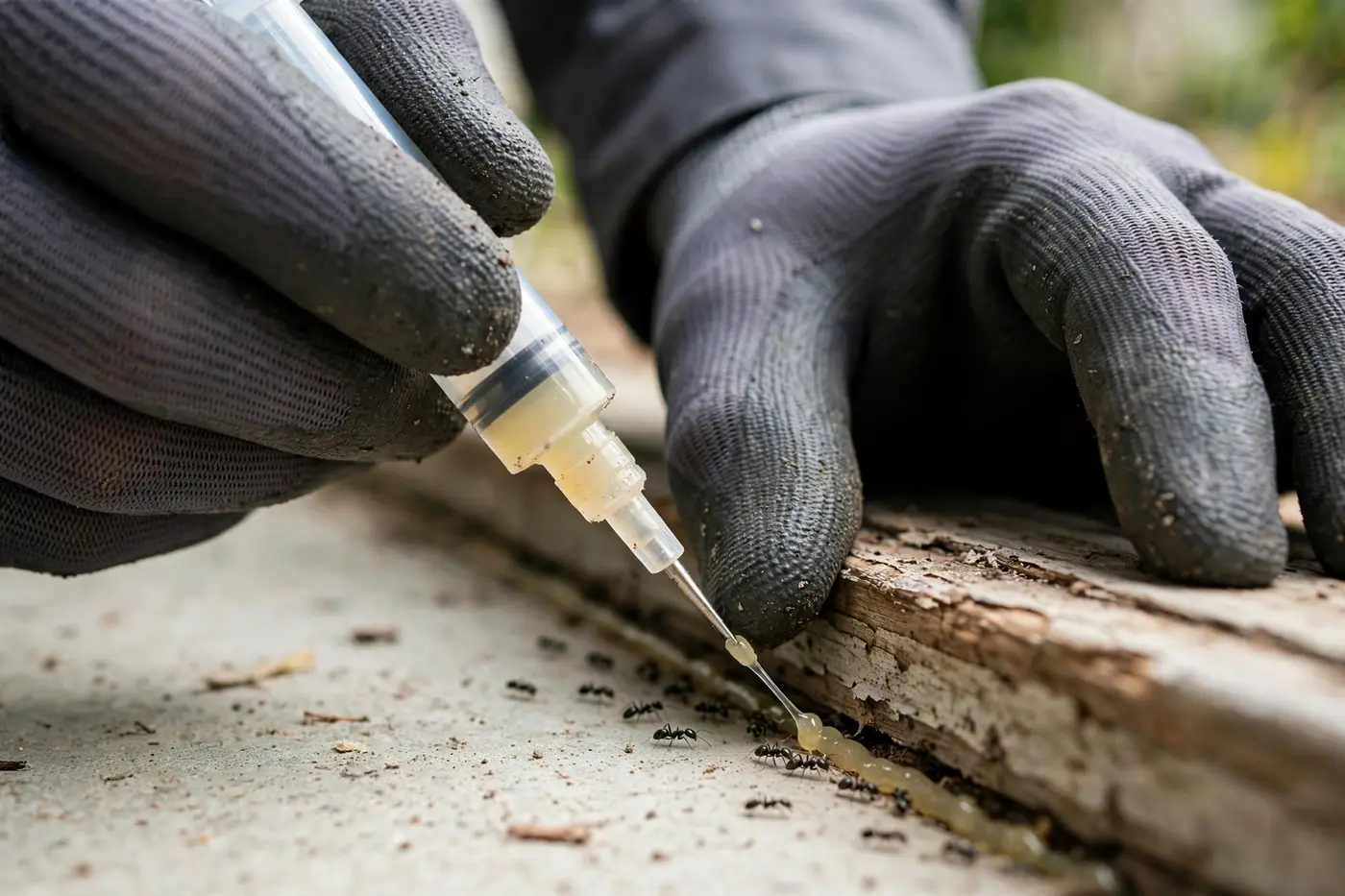
Ant Control in Sacramento
The local priority in Sacramento: Argentine ants. Ant Control explains how the work is done.

A year of pest pressure in Sacramento

Pest pressure here is seasonal, and the calendar matters more than any single treatment.

Spring: Spring starts the ant season in earnest, with Argentine ant trails expanding and fleas building on wildlife and pets.

Summer: Summer's dry heat pushes pests toward irrigated landscaping and the moisture around homes — ants, roof rats and drywood termite swarms.

Autumn: Autumn brings rodent movement toward structures and the last wasp peak.

Winter: Mild, wet winters keep moisture pests and indoor cockroaches active while rodents press the roof line.

In Sacramento, the rains organise the pest calendar more than temperature does. Wet months mean mosquito pressure measured in days after each downpour, termites feeding in saturated soil, and a steady drift of outdoor pests indoors whenever the ground stays soaked.

Sacramento homes and pest risk

The same weather produces different problems in different houses, and Sacramento's housing mix explains a lot.

Roughly 62% of households own their homes, and the stock is a real mix: 45% built before 1980 alongside 25% built since 2000, so brand-new subdivisions and mid-century streets sit on the same pest map.

Vacancy and turnover play a role too: with 945,650 housing units against 876,004 households, the metro carries the usual share of empty and between-tenant properties — and undisturbed homes are where bed bugs wait out vacancies, rodents nest unnoticed and termite damage runs longest before discovery.

Practical translation: exclusion — sealing, screening, sweeping — is worth as much as any treatment in homes of this vintage.

Preparation here is light for routine work: access to the foundation line and problem rooms, food put away in treatment areas, and your own notes on sightings, which steer the inspection to the right harbourages.

What a local inspection covers in Sacramento

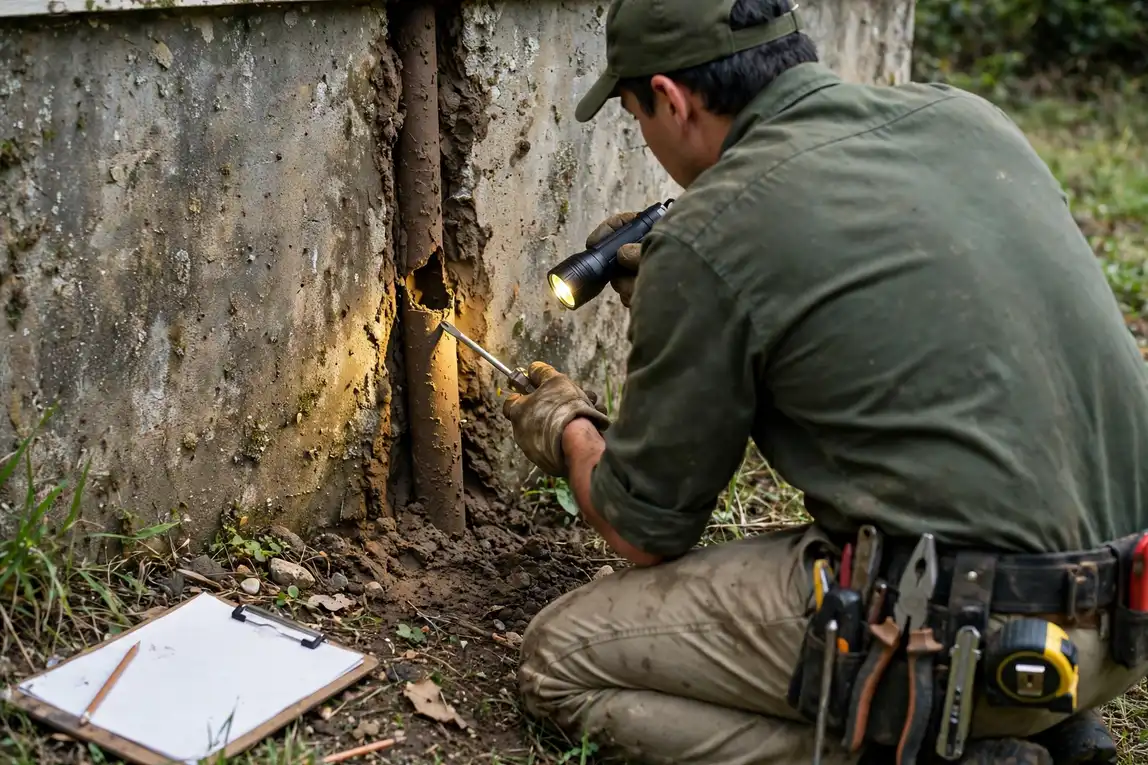
A local inspection in Sacramento follows the pests, not a script. Outside, the technician reads the foundation line, mulch beds, eaves and utility entries for Argentine ants and drywood termites first, because those are the metro's headline problems; inside, the route runs through the kitchen and bathroom plumbing, the attic and any crawlspace or basement the home has. What they write down — species, entry points, conducive conditions — is what the treatment plan gets built on, and it is why two neighbouring homes can legitimately end up with different programmes.

Termite Control & Inspection in Sacramento
Second on the Sacramento list: drywood termites. Termite Control & Inspection covers how that work is done.

A word on choosing well in Sacramento: favour the provider who inspects before quoting, names the species before treating, and puts the plan — scope, schedule, what is excluded — in writing. Be cautious with anyone who quotes a full programme over the phone sight-unseen, or who leans on urgency. Pest problems here are real, but they are measured in days and weeks, not minutes, and a good local company knows it.

Neighbourhoods and ZIP codes covered in Sacramento

Providers in the network serve the Sacramento metro across 14 named communities and the surrounding suburbs. The largest include Sacramento (about 524,802 residents), Elk Grove (about 177,221 residents), Roseville (about 152,438 residents), Arden-Arcade (about 96,319 residents), Citrus Heights (about 87,036 residents), Folsom (about 82,140 residents). Note how the list reads: these communities share one pest map — the same climate, the same housing eras, the same seasonal calendar — whatever their municipal boundaries say. A sample of ZIP codes covered locally:

956029560395604956059560695607956089561095612956139561495615956169561895619956219562395624956269562795628956309563195632

If your ZIP is not listed, call anyway — coverage follows the metro area, not a fixed list, and new routes are added as local providers join.

Counties in the Sacramento metro

The metro spans 4 counties. Each county page covers its local pest pressure and the city pages that serve it.

The metro's principal county is El Dorado County at about 1,708 square miles; altogether the 4 counties below cover roughly 5,093 square miles of California and neighbouring state land. County lines matter for pest work because licensing, and in some areas wildlife rules, run at state and county level — your provider works to the rules where your property sits.

Sacramento among its neighbouring metros

Pest pressure is regional, and Sacramento's map shades into its neighbours': the Yuba City, CA metro lies about 35 miles away, Vallejo, CA about 55, and Stockton, CA about 56 — close enough that the same weather systems, and largely the same pest calendar, run across all of them. Providers stay local to their own metro, but the reading of the seasons is shared.

Nearby metro areas

Pest control services in Sacramento

How PestReach USA works

1

Call and describe the problem

Tell us what you are seeing — ants in the kitchen, a nest under the eaves, scratching in the attic — and where you are located.

2

We connect you locally

Your call is routed to an independent local pest control professional who serves your area and handles your type of problem.

3

They inspect and treat

The provider inspects, identifies the pest, explains the plan and its terms directly to you, and carries out the work.

Frequently asked questions

How much does pest control cost in Sacramento, CA?

PestReach USA is a referral service and does not set prices — your local provider quotes their own work after inspecting, because the honest price depends on the pest, the size of the property and whether the job is a one-off removal or a recurring programme. That is as true in Sacramento as in central Sacramento — local providers plan by metro and county, not by neighbourhood lines. What we can tell you is what drives the figure: infestation size, access, treatment method and follow-up schedule. Be wary of any quote given without an inspection.

Are termites a serious problem in Sacramento, CA?

Yes — Sacramento sits in active termite country, where the combination of dry summers, mild wet winters and year-round moderate temperatures pests can work with keeps colonies feeding. Locally that plays out street by street — providers cover 4 counties around Sacramento, including the area around Sacramento. Subterranean termites are the main structural threat locally, and because they work out of sight, annual inspections are the standard recommendation for homes here regardless of age. Swarmers in spring, mud tubes on the foundation or hollow-sounding wood are all reasons to book an inspection promptly.

When is pest season in Sacramento, CA?

There is no single off-switch: pressure peaks from spring through autumn, with Argentine ants leading the warm months, while indoor pests — cockroaches, bed bugs, rodents in the structure — stay active all year. For Sacramento addresses that map runs across 4 counties, with Sacramento among the communities on regular routes. The local pattern is set by dry summers, mild wet winters and year-round moderate temperatures pests can work with, so well-timed prevention ahead of your problem pest's peak is worth more than reaction after it.

Do I need year-round pest control in Sacramento, CA?

Many Sacramento homes benefit from it, because the exterior barrier that stops most invaders weathers down over one to three months and pest pressure here is not confined to one season. For Sacramento addresses that map runs across 4 counties, with Sacramento among the communities on regular routes. Homes with lighter pressure — newer construction, few entry points, no history of infestation — may do well with seasonal or as-needed service. An inspection gives you the honest read for your property.

What pests should I watch for in an older home in Sacramento, CA?

With 45% of the metro's homes built before 1980, the recurring themes are pests of gaps and voids: rodents travelling wall voids, carpenter ants in moisture-damaged wood, and insects entering at settled joints and utility penetrations. Locally that plays out street by street — providers cover 4 counties around Sacramento, including the area around Sacramento. Older homes reward a thorough exclusion pass — sealing and screening — alongside any treatment.

Can a provider help with pests in my attic in Sacramento, CA?

Yes — attics are one of the most common work sites locally, whether the problem is roof rats, squirrels, bats, wasps or overwintering insects. Around Sacramento, the same answer holds from the core out to Sacramento — the providers' routes, not the city limit, define the map. The correct response is inspection first: identify the animal or insect, find every entry point at the roof line, remove or evict what is there, and seal the entries so the attic stays empty. Treating without sealing is a subscription to the same problem.

How fast can someone come out in Sacramento, CA?

Availability depends on the local provider's schedule and the urgency of the problem — stinging nests, rodents in living space and confirmed bed bug activity are normally prioritised. Homeowners near Sacramento hear the same guidance: the metro's providers work the whole area, ZIP 95602 included. When you call, describe the problem precisely; PestReach USA routes you to a local provider who will give you their real earliest appointment rather than a promise we cannot keep.

Which parts of Sacramento, CA do providers cover?

Coverage follows the metro rather than the city limit: providers serve Sacramento itself — including ZIP codes such as 95602 — and the surrounding communities this page lists, from Sacramento outward across the metro's 4 counties. Homeowners near Sacramento hear the same guidance: the metro's providers work the whole area, ZIP 95602 included. If your address sits near the metro's edge, say so when you call; routing is done on the provider's actual service map, and the neighbouring metros listed on this page are covered by their own local providers if your property falls on that side of the line.

Pest problem in Sacramento?

Call now — we will connect you with an independent local provider for an inspection and a clear plan.

Call Now

Mon-Fri 7:00 AM-10:00 PM ET | Sat 8:00 AM-10:00 PM ET | Sun 7:00 AM-9:00 PM ET